What Is Yoga Teacher Training? A Beginner’s Guide

Maybe you’ve been practicing yoga for a while and wonder what it would be like to share your experience with others. You might also be curious about the philosophy, the breathing practices, or how a thoughtful sequence comes together. 

Yoga teacher training gives you time to explore those interests with guidance, practice, and a community of people learning alongside you. If you’re considering a training, here’s a look at what you’ll study, what the different programs mean, and how to decide where to begin.

What is yoga teacher training?

Yoga teacher training, often shortened to YTT, is a structured program where you study the practice of yoga and learn tools for teaching yoga to others. You explore postures, breathing, meditation, anatomy, and yoga philosophy, along with the practical skills involved in guiding a class.

For most students, a 200-hour yoga teacher training is the starting point. It provides a foundation for teaching and gives you room to develop your own understanding of yoga. At Asheville Yoga Center (AYC), our 200-hour program is called “Teaching From the Heart.” We support students in learning to teach with care, creativity, and their own sincere voices. There’s room to ask questions, try new things, and grow more comfortable so that you can share what you’re learning with others. 

What do you learn in yoga teacher training?

A yoga class offers a small window into a much larger tradition. During training, you have time to stay with a subject, ask your questions, and explore how it connects to your practice.

Yoga postures and anatomy

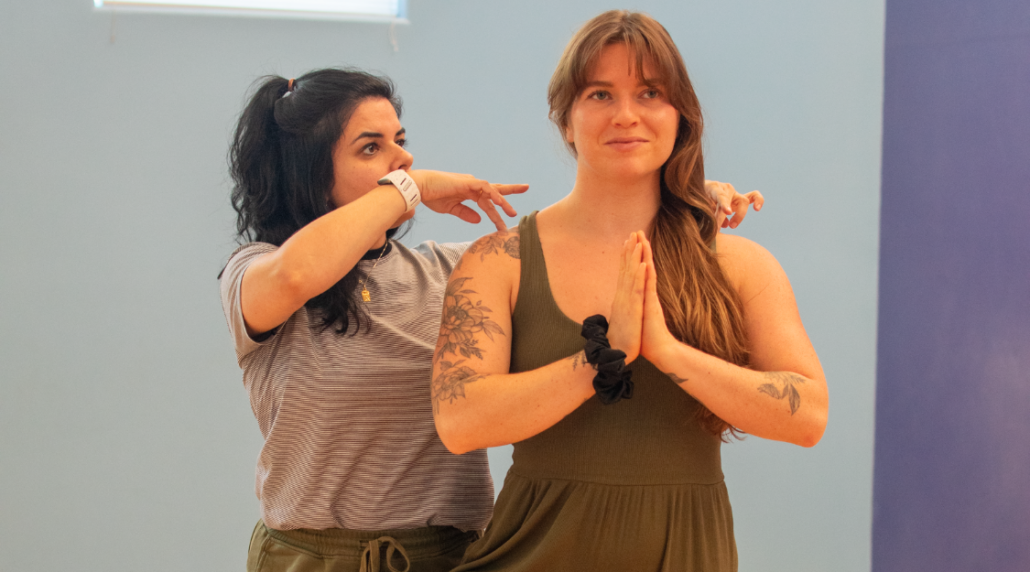
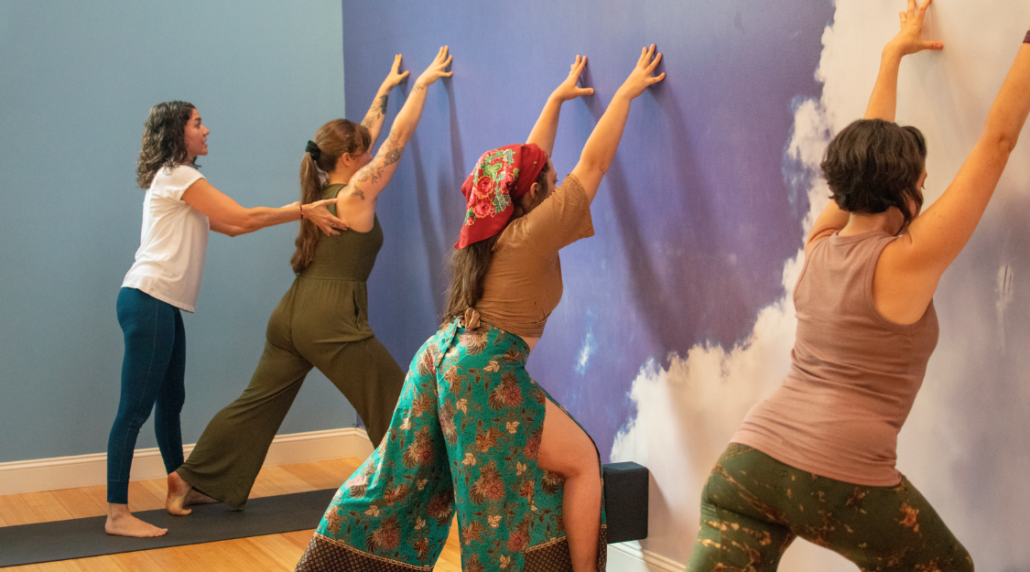
You’ll study asana, the physical postures of yoga, along with alignment and the anatomy that helps you understand movement. At AYC, this includes essential poses, foundational sequences, vinyasa flows, and an introduction to hands-on assists. As you learn to create sequences, you’ll consider how the poses fit together and how to communicate instructions clearly to students.

Breath and meditation

Pranayama, or breathing practices, and meditation are part of the curriculum, too. You’ll practice them yourself and learn how to guide others through them. Having time to explore these practices can help you understand instructions you’ve heard in class and become more familiar with how they feel in your own body.

Yoga philosophy and history

Teacher training introduces you to yoga’s history, philosophy, and texts, including the Yoga Sutras. At AYC, students also explore mythology, Ayurveda, mantra, and bhakti, which means devotional practice. We invite students to consider how these teachings relate to everyday life and how to share them in ways that are accessible and meaningful.

The art of teaching

You’ll learn how to plan classes and give clear cues, with opportunities to practice teaching along the way. Our program makes room for the creative parts of teaching, including storytelling, poetry, music, and thoughtful playlists. You’ll study with a variety of experienced instructors, giving you different perspectives to learn from as you develop your own approach.

What’s the difference between 200-hour and 300-hour training?

A 200-hour yoga teacher training provides the foundation. A 300-hour yoga teacher training builds on that education through more specialized study.

At AYC, graduates of a Yoga Alliance-registered 200-hour program can apply for our 300-hour training. Students choose from workshops and immersions in areas such as yoga philosophy, Ayurveda, anatomy, meditation, pranayama, trauma-informed teaching, and the subtle body.

The program is self-paced, allowing you to select subjects and dates that fit your interests and schedule. Free monthly online satsangs offer opportunities to connect with faculty and fellow students along the way.


Do you have to teach yoga after completing YTT?

You can enroll in yoga teacher training to deepen your personal practice, even if you’re unsure about becoming an instructor. Many students come to our program to learn, make time for yoga, and understand the teachings more fully. Some students discover a love for teaching along the way. You can decide how you’d like to use your education as you go, bringing what you learn into your practice and daily life. 


How much experience do you need before starting?

We recommend at least six to twelve months of consistent asana practice before applying for the 200-hour program. That experience gives you a foundation to build on during training.

If you’re wondering about your readiness, start with what you’re most curious to learn and the time you can commit to studying. If you’re working with an injury, reach out before applying so we can discuss your circumstances with you.

How long does yoga teacher training take?

The schedule depends on the program. We offer two in-person formats for our 200-hour yoga teacher training in Asheville, NC:

  • Four-week immersion: Full training days, Monday through Friday, over four consecutive weeks. This format gives you an extended period to focus on yoga, with homework to complete in addition to your sessions.
  • Eight-weekend training: Training spread across scheduled weekends, with time between sessions to practice, study, and bring what you’re learning into daily life.

Both formats cover the same curriculum. To decide which is best for you, think about how you learn and what your schedule can support. Some students appreciate a concentrated period of study, while others like having time to absorb the material between weekends.

What certification do you receive?

After completing our 200-hour training requirements, you receive a teaching certificate from Asheville Yoga Center. Graduates can use their training certificate to apply for the Registered Yoga Teacher designation, commonly called RYT 200, through Yoga Alliance. Registration involves an application and a membership fee.

Choosing a yoga teacher training

A training is a commitment of time, money, and attention. Give yourself room to ask questions before choosing one. Look at the curriculum and faculty. Consider the subjects you’d like to study, the opportunities to practice teaching, and the support available during the program. Ask about homework and attendance expectations so you can plan for the full commitment.

Read our article for 5 Questions to Ask Before Joining Yoga Teacher Training. 

If you’d like to learn with us, explore our 200-hour yoga teacher training page for upcoming dates and details, payment plans, scholarship opportunities, and work-study options. If you’ve already completed your foundational training, take a look at our 300-hour yoga teacher training. We’re happy to talk through your questions and help you consider your next step.

The post What Is Yoga Teacher Training? A Beginner’s Guide appeared first on Asheville Yoga Center.