Being a golf journalist can have its perks — the occasional round on a bucket-list course; opportunities to chat with influential people in the game; the chance to test out new equipment — and every once in a while, the job provides a game-changing experiences I never expected (and sometimes never knew I needed).
Such was the case several years ago at the annual PGA Merchandise Show, when I met with a FootJoy glove specialist to learn about the brand’s new releases and latest developments.
“Let’s start with the basics,” she began. “What size glove do you wear?”
I told her I was a large. “I think so, anyway,” I added.
“Well,” she replied, “let’s find out.” After a quick measurement, she handed me a glove to try on. It took a few moments to slide my fingers all the way in, but after securing the Velcro closure across the top, the glove was on. It was snug, but it was on.
“That’s your correct size,” she told me.
I was shocked.
As it turns out, I wasn’t a size large. I wasn’t even a medium/large. My hands, evidently, were size medium. I took some comfort in learning that I wasn’t the only golfer to make such a mistake. In fact, I learned many amateurs are likely wearing gloves that are too large for their hands. (Many brands have a golf glove fitting guide to determine your actual size.)
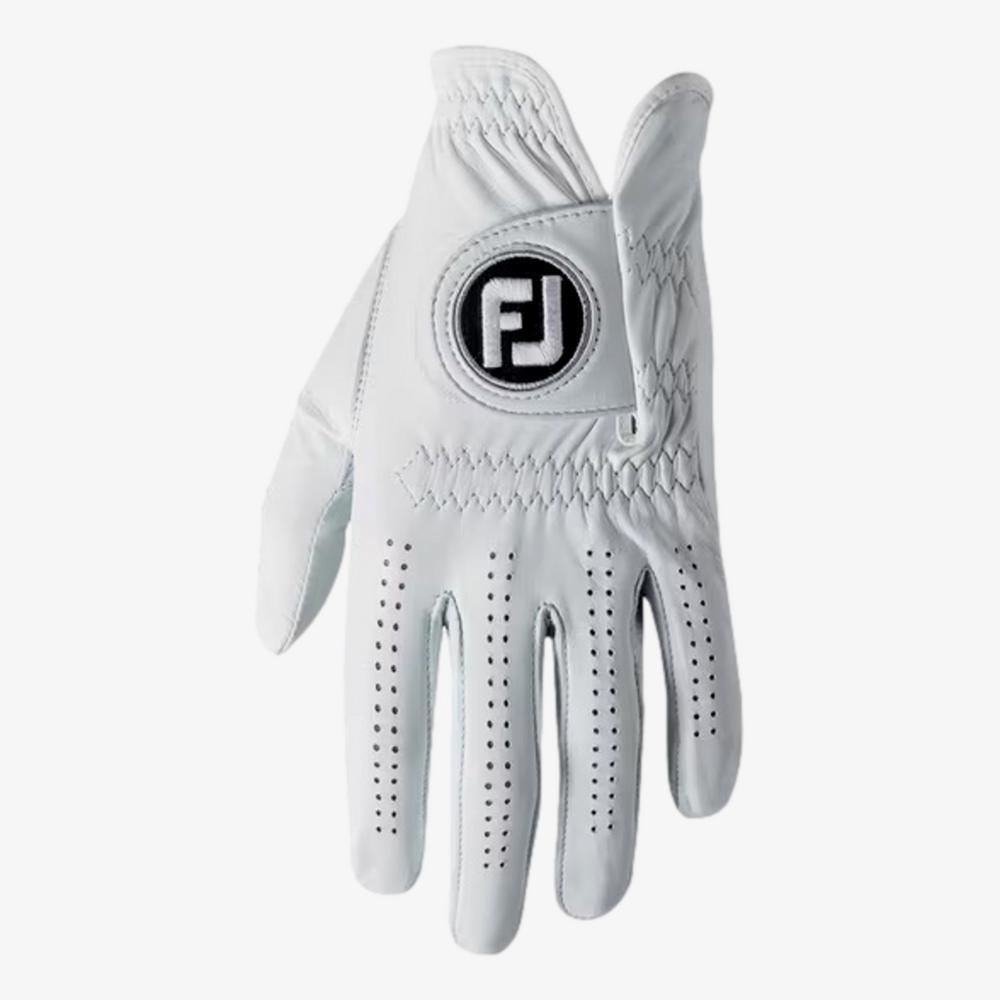
View Product
Right about now you’re probably asking yourself the same question I did when I first learned of my mistake: Can wearing a glove that’s too big really affect how you play?
Not only will it impact your shots, I learned, but it can negatively affect your wallet, too.
“Performance is paramount,” says DJ Zabkar, FootJoy’s current director of product management for gloves. “So ensuring the golfer knows what to look for when selecting the perfect glove for them is very important. Just because a hand fits into the glove, does not mean the glove fits the hand.
“The glove should fit like a second skin,” he continued. “When a golfer is trying on a glove initially, a quarter inch of the Velcro should be visible. Throughout its lifespan, a glove stretches and contours to the golfer’s hand. If the tab comes over too far [when the glove is new], it’s too wide for the player.”
In other words, a glove that’s too large may feel like it’s a perfect fit for a short period of time, but it will soon stretch to the point that it ends up being way too big for the majority of its lifespan. As Zakbar advises, the most important thing to look for (aside from the quarter inch of Velcro being visible when the closure is secure) is the presence of any extra material in the fingers, on the palm side of the glove, or across the back of the hand. “Extra material will lead to abrasion,” he explains, adding that it will also get in the way of a player having a full connection to the grip of the club. “That can cause the club to slip or move in the swing.”
The abrasion that comes from too much material will also impact how the glove ages. More specifically, if the glove doesn’t fit properly, it will wear out faster than one that does. But there are other tactics that can help you prolong the life and performance of a golf glove, and these I learned much more recently.

View Product
After receiving a pair of Bruce Bolt’s new golf gloves to test out at the end of last year, I dutifully read through all the messages printed on the package. Most told the brand’s story and emphasized the quality of the craftsmanship—standard marketing material. But the “Front 9 and Back 9” section caught my eye. Here’s what it said:
There are 2 gloves in this bag. We know from playing in the Texas heat that leather starts to break down and stretch when you start to sweat. So we thought it would be smart to sell our gloves in pairs. One glove for the front 9 and one for the back 9 (or really so you can rotate them throughout the round so they can dry between holes.)
To corroborate that strategy, I checked with Zakbar. After all, FootJoy sells its gloves individually. So if this was just a clever sales pitch from Bruce Bolt, I figured Zakbar would set me straight.
“We strongly encourage people to buy multiple gloves at a time and rotate them,” he acknowledged. “It’s going to make each glove last longer. It’s not to sell more gloves. It’s because the performance benefits of the glove will last longer as you keep it fresh and rotate.”
Equipped with this information, I’ve since made it a point to rotate my gloves at least every nine holes, and the evidence speaks for itself. A pair that I’ve been wearing regularly and rotating often have seen several hundred holes and still look, feel and perform as if I’ve only been wearing them for a handful of rounds.
You might say I finally have a solid grip on my golf gloves, and it’s led to a better grip on my overall game.
The post Don’t hurt your game by making these golf-glove mistakes appeared first on Golf.