With all the “inside baseball” golf content out there now, it’s no secret that Tour players get a little more TLC than the rest of us. That’s how it should be. Any professional athlete playing for millions of dollars represents the peak of their craft.
Much like top surgeons or global artists, the attention paid to their specific tools requires the people serving them to ask a few extra questions that an average golfer would never consider.
Why?
Because beyond the money, what I’ve learned spending countless hours on PGA Tour driving ranges is that elite performance is never a broad endeavor. It’s in the nuance—the tiny details that reveal themselves over thousands of consistent strikes—where the best players find value. That’s where Tour fitters make their living. The world is full of elite fitters in every major city and on social media—hell, I’d consider myself a +4 fitter—but I’m nowhere near the guys who build and dial in Tour players every single week.
In all my travels, I’ve actually never had a full bag Tour fitting. For one, I’m not a Tour player. Second, it’s a process that takes way more time than a standard retail fitting. It’s a big ask for a 49-year-old 2-handicap.
But we put an opportunity together, and it was a serious eye-opener.
Our setup came courtesy of PXG Tour fitter Anthony Gagliano and Scottsdale National Golf Club. If you’ve never been, arriving at Scottsdale National feels a bit like the opening scene of Jurassic Park when the Jeeps roll through the massive gates. It’s almost overwhelming. Perfect turf, a ridiculous short game area and a PXG fitting setup with zero left to the imagination.
Scottsdale National is Bob Parsons’ home track, and he’s built it into a total haven for Scottsdale-based PXG staffers like Jake Knapp. For a fitting like this, it’s ideal because you can test clubs in every real-world condition. Uphill into a fan? They’ve got it. Flat? Covered. Downhill? Same thing. When you leave, you know whatever gear shows up at your door after the fitting has already survived the gauntlet.
This was a full Tour fitting, which follows a strict protocol. I’ve done single-club Tour fittings in the past with guys like Adrian Rietveld at TaylorMade and Ben Schomin at Cobra, but never all 14 sticks at once.
The premise was simple: What if I was a PGA Tour free agent looking at PXG? What does that evaluation actually look like?
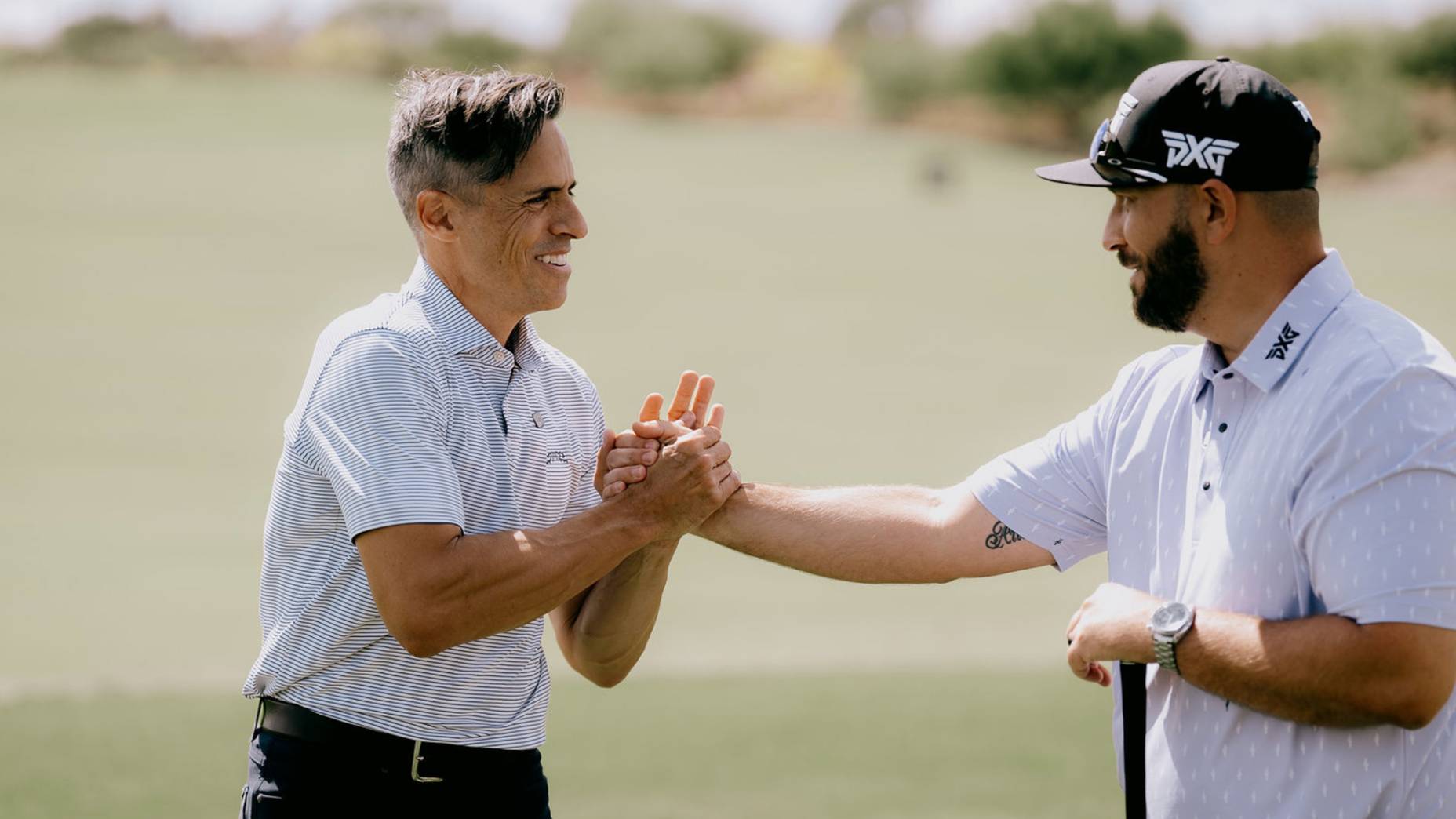
The process starts with analyzing your current baseline. I dropped my clubs off at PXG HQ the night before so Anthony could spec out my entire bag. Not just lofts and lies, but total weight, swingweight, grip size, tipping, bounce—every detail that makes up a club’s footprint.
This is the first major difference between a Tour fit and a retail fit. They take all that data to build “first-hit testers” using PXG components. They hand you a PXG build with the exact same baseline specs as your personal gamer so you get a true apples-to-apples comparison. Commercial fitting shops try their best, but time and inventory logistics make that almost impossible for them. Furthermore, Tour fitters aren’t using heavy, interchangeable adapter sleeves for iron testing. They build actual, glued-up finished options.
Then, the hitting starts.
Anthony had me hit every club in my bag 8 to 10 times to log baseline metrics: launch, spin, ball speed, carry, curve, start line, gapping, descent angle, angle of attack, path, dynamic lie, dynamic loft and face-to-path.
Notice I mentioned start line, curve and dynamic path metrics. Those in-motion numbers are vital because they show the exact dynamic relationship between player, shaft and head profile.
After running through my bag, the data showed I was actually in a pretty good set mathematically. I was optimized, and my gapping was clean. Crucially, I had “one miss” baked into my setup. In my time spent around Tour players, finding a single, predictable miss and a consistent start line is the North Star of club fitting. It doesn’t matter what that miss is, as long as it’s identical across the bag. In my case, I want a start-right, fall-left pattern—essentially taking the right side of the course out of play. My swing character is a bit more Rocco Mediate than Scottie Scheffler, and I’m fine with that.
When we moved to irons, Anthony got to work.
I walked in playing a set of Cobra 3DP Tours that I love. Their speed and spin combo was solid, and my miss was predictable. At 49 years old, that’s everything.
View Product
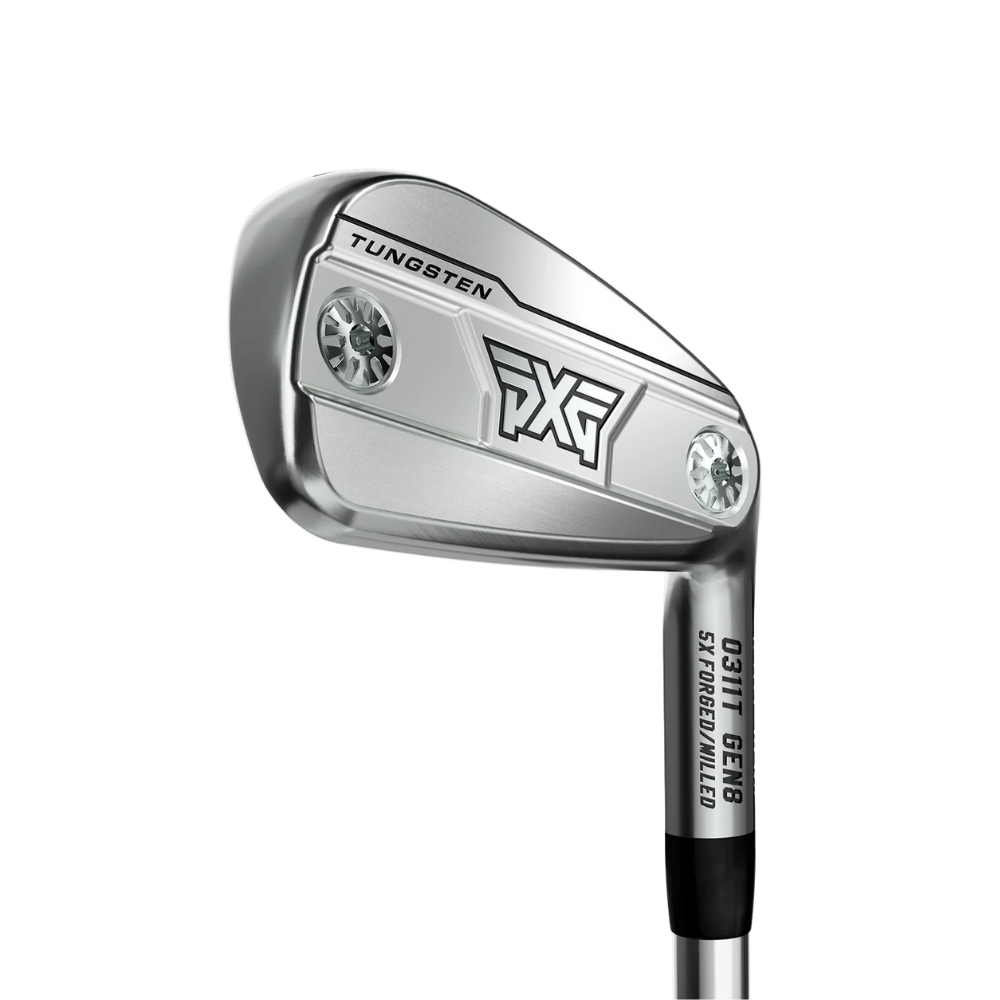
Anthony handed me the new PXG Gen 8 T and looked at the data:
“I like what you walked in with, but you’re leaving a few things on the table. Your current irons aren’t spinning quite enough—especially the short irons—the start line is a little too far right, and your path numbers are jumping around.”
In plain English: I was making my current clubs work through swing adjustments rather than letting the head work with my natural movement. The right head profile wants to swing the same way every time because the center of gravity (CG) stabilizes the feel at impact.
I tested the 0317 Tour CB, 0317 ST blades, Gen 8 P and Gen 8 T. While each had merits, Anthony narrowed us down to the Gen 8 T. Shape, feel, spin/speed balance and forgiveness are dialed in on this head.
The Gen 8 T and P models feature moveable heel and toe weighting right in the iron head. For my swing—where I want the ball starting on line and falling left—Anthony weighted the heel on the Gen 8 T.
Immediately, the start line moved on-target, and the ball fell gently left. Even when my swing path got a bit too far inside-out, the head stabilized the face, eliminating the rogue block to the right.
Then came the gapping fix.
Most golfers hit a wall in their iron gapping. For me, that wall hit at the 5-iron. My 7-iron ball speed averages 123 MPH, and my 6-iron steps up nicely to 128 MPH. But with my traditional 5-iron, speed stalled out at 132 MPH. I need a bit more out of a 5-iron because I go into a 4-hybrid that has a yardage range of 212 to 220. My 5-iron needs to have a floor of 200 carry to work.
Anthony swapped the Gen 8 T 5-iron for a Gen 8 P head—a slightly larger, faster profile. Ball speed bumped to 135 MPH, filling the exact gap I was missing with higher launch and a reliable draw.
PXG’s moveable weights in the irons give them a lever that not many can pull. He was able to shift start lines and fix a miss by moving weight, not adjusting the lie angle, which for me is huge.
To compare the numbers, it needs to be said that there wasn’t a HUGE difference in the actual performance numbers in terms of ball speed, launch, spin, etc. It was more a neutral miss and no-brainer shot shape.
7-Iron Comparison
3DP Tour (32)
122 MPH
6000 RPM
18 launch
88 MPH Swing Speed
0311 T Gen 8 (32)
122.3 MPH
6500 RPM
19 launch
89.3 MPH Swing Speed
Moving to the metalwoods, the goal stayed identical: build a seamless flight bias and eliminate the big right miss.
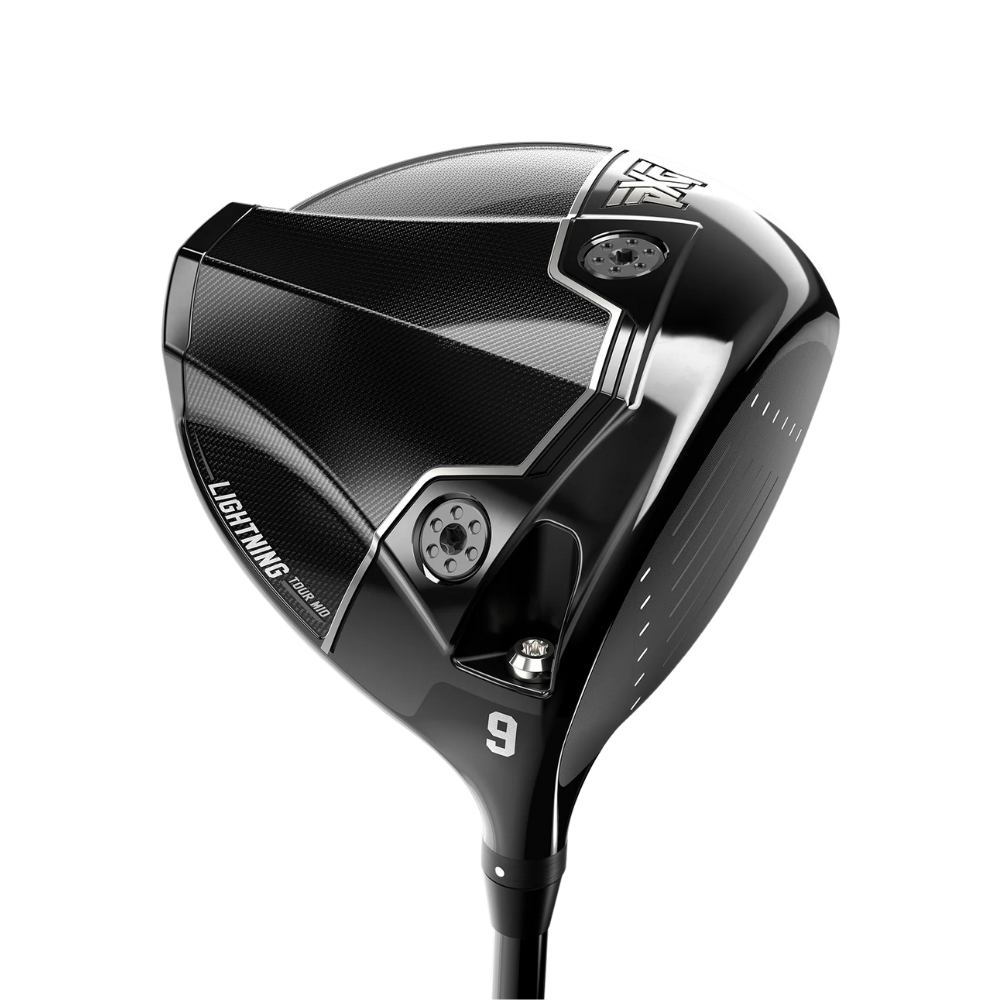
Anthony laid out a plan for a driver, 3-wood and 5-wood using the new PXG Lightning heads. He set them all up with a slight heel-bias, then paired them with a shaft profile that matched the timing of my irons (where I play Nippon Modus 120X). We landed on the Fujikura Ventus Blue TR with VeloCore+.
View Product
Anthony wasn’t just chasing peak speed numbers; he was fitting for efficiency and how my hands delivered the club. Tour fitters use data from one part of the bag to directly inform the next.
He had a massive matrix of premium shafts ready on the tee, but he didn’t need to throw 50 options at me. He watched my delivery, looked at my swing tendencies and went straight to the build profile that stabilized my delivery. The point of a Tour fitting isn’t to make things more complicated; it’s to eliminate variables so all 14 clubs speak the exact same language.
Here is the final comp of the drivers:
Gamer QI4D 9@8.5 w/ Ventus Black Velo+ 6X
161.6 MPH
12 Launch
2385 RPM
270 Carry
109.7 Swing Speed
PXG Lightning Tour Mid 9@8.5 w/ Ventus Blue TR Velo+ 6X
161.8 MPH
13.3 Launch
2285 RPM
273 Carry
110.1 Swing Speed
This was the toughest category because my Qi4D is already battle-tested on course, in tournaments, etc. I gotta say though, where PXG has come in the metalwood category over the past 3-5 years is astonishing. The Lightning line is as competitive as anything out there, and we learned that in October at launch, when Jake and I were both scratching our heads wondering how a company this young could make such a leap. It’s impressive. The whole lineup is just SOLID.
Wedge fitting was a refreshingly low-tech process. Anthony brought out a set of PXG Sugar Daddy wedges built to match the specs of my standard Vokeys.
We checked gapping on the launch monitor first:
Then came the 58° lob wedge. Anthony handed me three different sole grinds, pointed toward the short game facility, and said:
“Go hit shots off the turf and out of the sand. The grind that sounds like a finger snap when it hits the turf is the right one.”
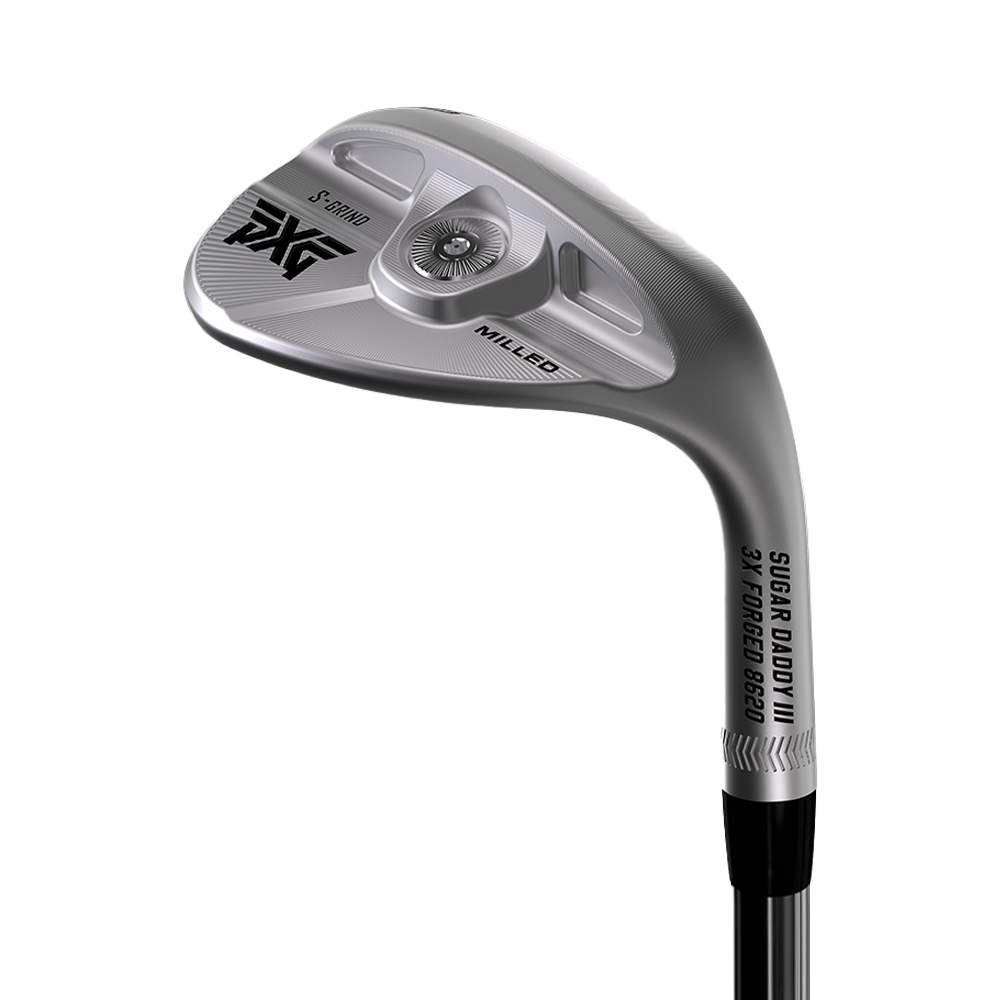 PXG Sugar Daddy III Custom WedgeArtfully engineered for versatility, customization, and insane accuracy across all playing conditions. PXG 0311 Sugar Daddy III Wedges are 3X forged, 100% CNC milled, and feature three innovative sole designs to allow players to find their perfect fit while experiencing the quality and precision only PXG can deliver. Available right and left-handed in both Chrome and Xtreme Dark finish. BENEFITS Versatility Outstanding Control Customization Innovative Adjustability Unmatched PrecisionView Product
No launch monitors, no screens—just feel, turf interaction and trajectory. I spent 20 minutes hitting low spinners, flops and bunker shots until one specific grind clearly separated itself. When I walked back to the truck, Anthony just nodded. He already knew which one was coming back.
So, what’s the real difference between a Tour fitting and a standard retail fitting?
Tour fitters don’t chase single-shot peak ball speeds or ideal launch conditions for a screen-grab. They fit for patterns, start lines and predictable misses.
Anthony looked at my natural swing tendencies, identified where my misses were coming from and used PXG’s weight-tuning system to build clubs that protected my swing from itself. Once the start lines and flight patterns stabilized, the distance and speed took care of themselves. Is every club in my bag faster, higher, straighter than the gamers? NO. This new set is predictable. Although the fun numbers saw a slight uptick in many ways, at the end of the day I left PXG with one shot, one miss across the bag. That’s why I showed up and Anthony delivered.
The post What it’s REALLY like to get fitted on Tour: My full bag PXG Tour fitting appeared first on Golf.