The latest episode of Tour Validated was a personal one for me. I got to sit down with my dear friend Johnny Thompson, who is the current tour content manager at Callaway Golf. (Yes, my old gig.) Thompson is becoming known for his content, but on the Tour range, he’s still one of the most respected Tour fitters in golf. His wealth of knowledge and stories around working with the world’s best is unlimited.
We got to talking about Tour R&D — and the convo pivoted to Xander Schauffele. This is cool.
Let’s zero in on a specific part of that conversation that absolutely blew up my text messages after the episode aired: the real backstory of Schauffele’s driver struggles and how it forced Callaway to invent the Triple Diamond franchise.
For the gear junkies who think tour players just snap their fingers and magic happens, this is your ultimate reality check.
When Schuaffele first came over to Callaway, everyone assumed it would be an overnight, plug-and-play fit. It wasn’t. In fact, that first year was an absolute grind behind the scenes.
The truck was trying to fit him into the existing retail structures, running through the standard Rogue and Flash heads. On paper, everything looked fine. If you looked at the launch monitor, the ball speed was there, the launch was there, and the spin was exactly where the computers wanted it.
But out on the golf course, Schauffele was fighting it. He couldn’t find his start and fall line, which is HUGE for him. If it’s proper, it represents that most of the other tiles on a TrackMan are sound. Fitters know there is more to it than that, but Tour players are typically feel and sight oriented so that part is a non-negotiable.
Said Thompson: “It stung, man. We’d come home from weeks and just know we weren’t there with him with the current driver we had.”
Schauffele is a hyper-precise feel player who relies on an incredibly specific visual relationship with the face at address. If the club doesn’t sit on the turf perfectly, his brain subconsciously fights it. It got to the point where they built him a custom 440cc head just to try to trick his eye, but the consistency still wasn’t there. Schauffele actually went back to his old gamer from a previous OEM late in the year just to find comfort.
So what was the actual problem? Through months of gathering data and getting feedback from Schauffele and his dad, Stefan, the R&D team diagnosed a visual conflict in how traditional drivers were being shaped.
To make a driver look appealing to a massive cross-section of players, standard heads often feature a blend of different visual vectors:
For a normal amateur, you don’t even notice it. But for a world-class ball striker looking down at address, it was an optical illusion. If Schauffele looked at the toe, it looked shut; if he looked at the top line, it looked open. He was getting conflicting messages before he even started his takeaway. If Schauffele likes the “open” look, Jon Rahm is the polar opposite, he wants it shut. That makes sense — Schauffele is a drawer of the golf ball primarily, and Rahmbo is a cutter.
View Product
Callaway went back to Carlsbad and spent eight months building a tour-only prototype designed specifically to fix Schauffele’s eye.
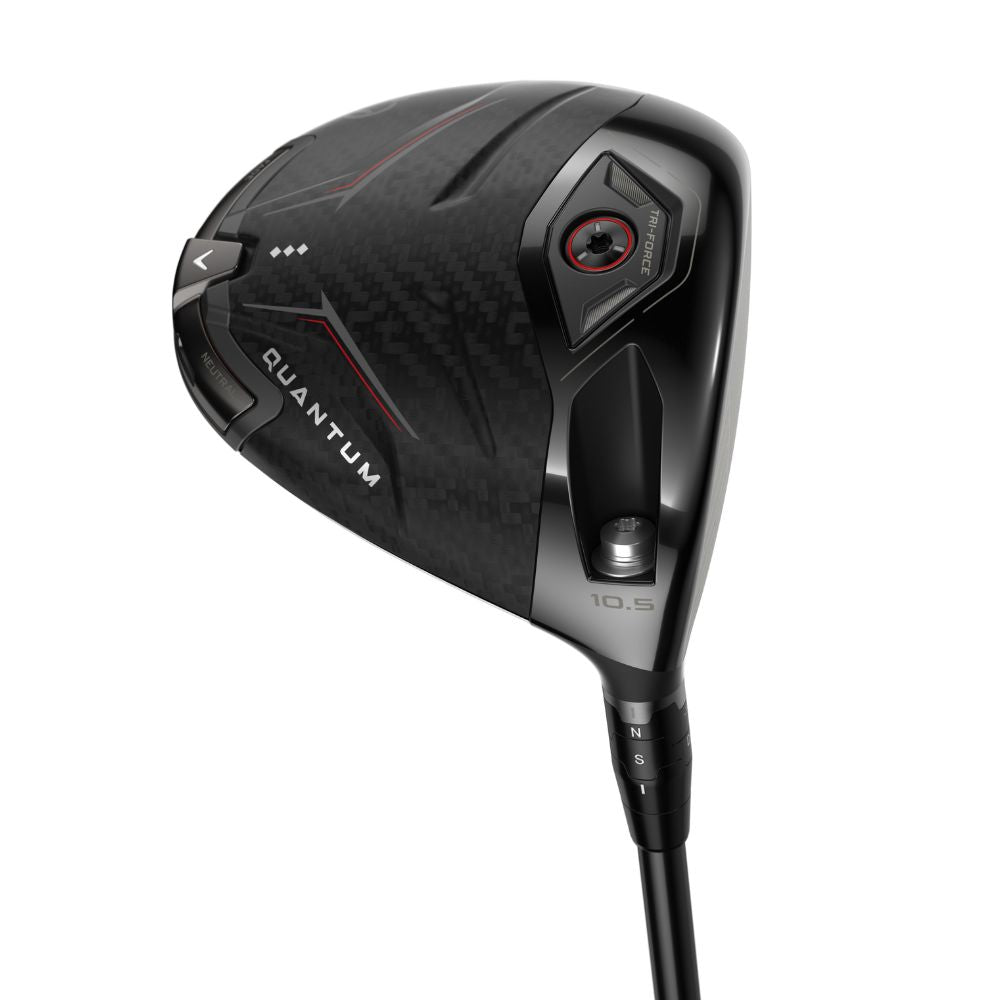
They threw out the old face-shaping parameters and made the club face completely linear. They aligned the bottom sole line, the middle face vector and the top line perfectly parallel. When you set it on the ground, it sat PERFECT or linear. No illusions. No tricks.
To track these ultra-linear, low-spin heads on the truck, they stamped them with three small diamonds.
The confirmation of that entire process came at the season-opening event in Maui. Xander had put the fresh Epic Flash Sub Zero Triple Diamond prototype in the bag for its competitive debut.
On Sunday, he shot a final-round 62 to come from behind and win the tournament.
As the reps (and the company) watched on, seeing a club that caused you months of work win in its very first week out is the ultimate validation. It proved that the R&D shift worked. High-speed players across the tour immediately started demanding the same linear shape, and Callaway added the Triple Diamond to the retail lineup the following year.
Every time you see that Triple Diamond logo on a retail rack today, remember: It exists because a world-class player refused to compromise on how his driver sat on the grass.
Want to overhaul your bag in 2026? Find a club-fitting location near you at True Spec Golf.
The post From tour van failure to retail gold: The real story behind the Triple Diamond appeared first on Golf.