Sunday at the PGA Championship was set up to be a “free for all” between several of the game’s biggest stars. Jon Rahm, Rory McIlroy and Xander Schauffele were firmly in the hunt entering the final round, while Scottie Scheffler lurked on the periphery.
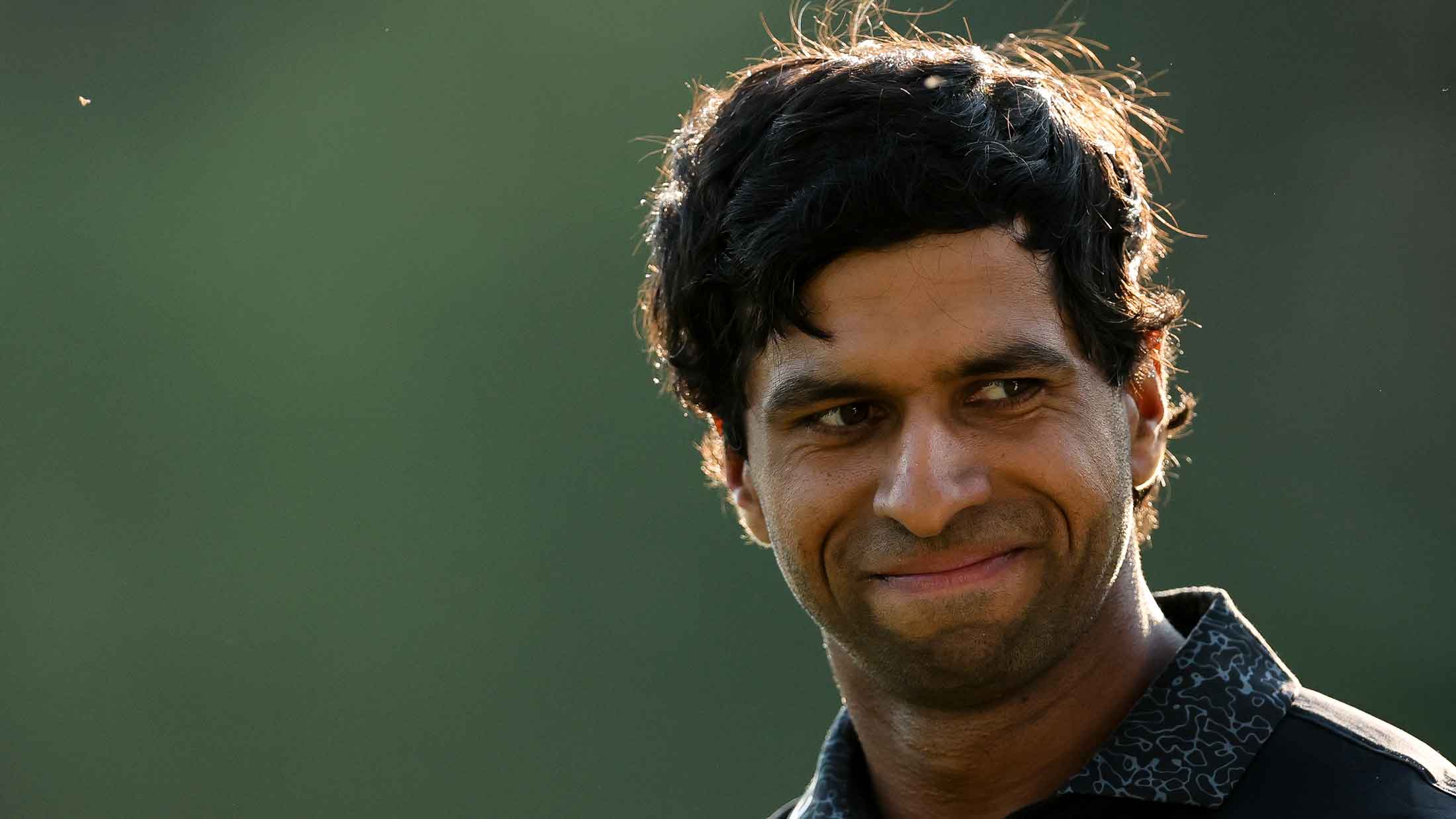
But the chaotic Sunday that was promised at Aronimink never materialized. Scheffler never got out of neutral, McIlroy’s driver betrayed him and Rahm couldn’t figure out the speed of the Golden Age greens. While golf’s stars puttered along on Sunday, Aaron Rai took control of the tournament as he made the turn and ran away from the field to claim his first major title. Rai shocked the world with his PGA Championship victory. Nothing about his recent form suggested that Rai would be the one to leave Philadelphia with the Wanamaker Trophy. He had just one top-20 finish on the year entering the event and had spent the previous week at the opposite-field Myrtle Beach Classic while the PGA Tour’s top players were at the Truist Championship.
But it was there, in Myrtle Beach, that Rai found the key to what would be a career-altering win a week later.
Rai entered Sunday in Myrtle Beach as the 54-hole leader. It was his first time playing in the final group since the Abu Dhabi HSBC Championship in November. On that Sunday, Rai stared down McIlroy and Tommy Fleetwood to take home the trophy. He lived a different life in Myrtle Beach, stumbling on Sunday and eventually finishing three shots behind Brandt Snedeker.
But that final-group refresher gave Rai what he needed to seamlessly navigate the Sunday cauldron at Aronimink.
“That experience at Myrtle Beach was absolutely invaluable for the PGA, and I’m not sure I would have handled the situation as well as I did at the PGA if I hadn’t experienced it the week before at Myrtle Beach,” Rai said on Tuesday at the Memorial. “Two reasons, really. One, I hadn’t really been in the last group for probably a good five months, six months previous to that. So to get that feel of what it’s like again was huge.
“There were a couple of small things that kind of happened during that round on Sunday. Bits from the crowd, bits from a couple of mistakes that I made in the mid-section of the round. I think I made four bogeys in a row around the turn. I think just kind of where my mind went, certain things that I could have dealt with better, I was very aware of even on the Saturday of the PGA. And I think when you’ve had that experience so recently before, it’s a lot fresher in the mind and it’s a lot easier to make those adjustments. So, that was crucial, really.”
For the first eight holes of his final round at the PGA, Rai was scuffling. He was one over on the round and looked like he might exit the proceedings. But he reset after a bogey at No. 8 and broke free of the pack atop a jammed leaderboard within the hour. He poured in a 33-foot eagle putt at the ninth and added a birdie at No. 11. Then came the short par-4 13th. Like most players on Sunday, Rai’s tee shot found the greenside bunker. All day, players had tried to play a chunk and run out of the front-right bunker to a back-left pin. All of their shots came up short and they left the gettable 13th with a par.
But Rai did what the course asked; he flew the bunker shot to the back shelf and stopped it 6 feet from the pin. He rolled in the birdie putt and never looked back.
It was a seismic moment for Rai. Majors are the lens through which we discuss seasons, careers and legacies. Those four days outside of Philadelphia will change a lot for Rai, but the gravity of that achievement didn’t set in until he saw his father a few days later.
“I think it took a good few days, I think, for me to really get my head around it,” Rai said. “I don’t think I still have fully. But the following morning it was just more of an excitement really. I only slept for four hours on the Sunday night. I slept really late and then I just couldn’t sleep in the morning either after I woke up. So I think just a lot of excitement. It was only really when my dad came to my house a few days later that we started to speak about it a little bit more that I started to kind of embrace it and let it sink in a little bit more.”
Rai’s father, Amrik, was a talented amateur tennis player who gave up his dream to put clubs in his son’s hands. He had Rai play on a customized course suited to his age, instilled in his son the importance of hard work and dedication from a young age, and helped pave Aaron’s path to his crowning achievement at Aronimink. Amrik missed his son’s win because he had fallen asleep in his camper van back in the U.K.
But once Amrik arrived in Jacksonville, his son started to feel and grasp the weight of the victory.
“My dad, he’s a very proud man,” Rai said. “He doesn’t show a huge amount of emotions. But the first evening that I saw him, his hug was a little bit different. His smile was a little bit different. We sat, and we spoke for probably a good couple of hours or so. And again, probably just how big of an achievement that was. I could probably hear it more from what I associate with how he is normally and how he was during those first couple of days. So I think, yeah, that definitely held a lot of weight for me internally.”
Aaron Rai is still getting used to his new reality — to more people recognizing him, to the extra media requests, to being called a major champion. But that’s all part of the package, one he found the key to unlocking on a Sunday to forget at an opposite-field event in Myrtle Beach.
The post The key to Aaron Rai’s stunning PGA win? He found it in an unlikely place appeared first on Golf.