The battlefield is always now
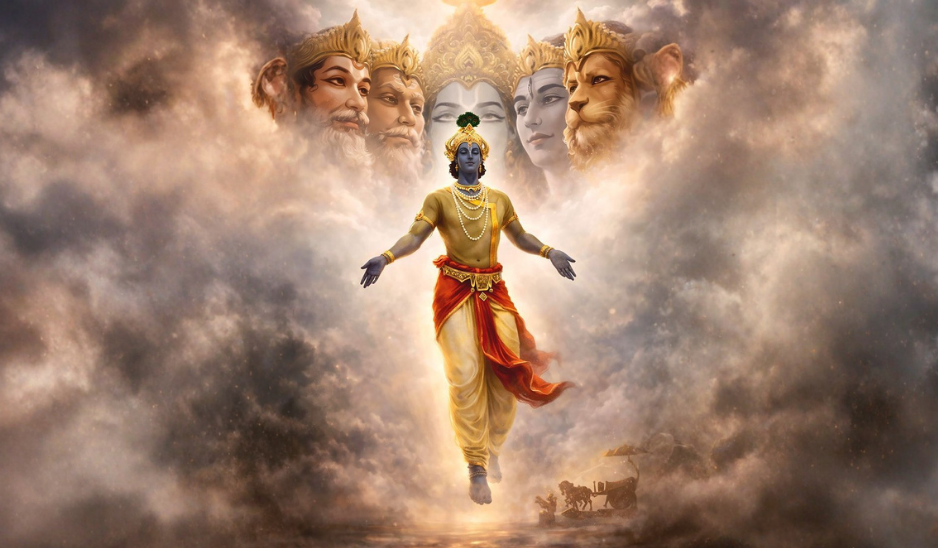
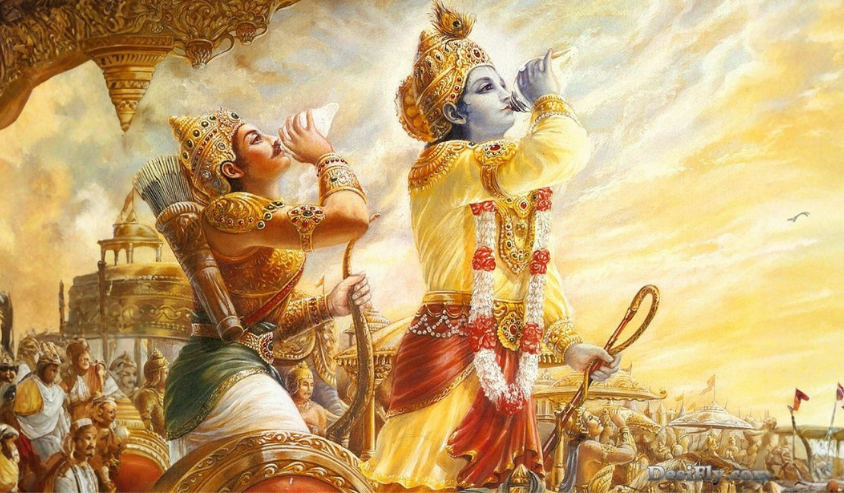
The Gītā opens on a battlefield. Arjuna — great warrior, prepared and skilled — freezes. He cannot lift his bow. He sees the faces of people he loves arrayed against him and is overcome by grief, confusion, and the desire to simply walk away from all of it. His teacher Krishna does not console him. He offers him something far more valuable: clarity. And the dialogue that follows are eighteen chapters of the most precise, compassionate, and demanding philosophy ever written.
The Core: You know who you are. Now act from that place.
What has struck me most deeply in sitting with this text over many years is how it never stops being relevant. Not because the world keeps presenting us with the same problems, but because we keep arriving at the same essential crossroads — the moment where we must choose between what is comfortable and what is true. Between the conditioned self and the witnessing Self. Between the costume and the One who wears it.
We are consistently being barraged with distractions that keep us acting from the heart and soul and yet something within us is always being nudged back toward our essential nature. All the time, a latent force is quietly trying to remind us what we are. Our senses turn outward, the noise accumulates, we drift — and the nudging continues. This is the grace of the Divine Mother that the Gītā speaks of. Not something we earn or manufacture. Something that meets our sincere effort and descends. All it takes is one small step, serving the Highest Self and Sri or cosmic auspiciousness starts to reveal itself.
Verse 2.40 carries this promise with extraordinary tenderness:
On this path effort never goes to waste, and there is no failure. Even a little effort toward spiritual awareness will yield protection from the greatest fear.
Even a little. Sincere, repeated turning toward what is true — this is enough to begin the return.
Sthitaprajña: the steady flame
What I have come to understand — and what the practice keeps teaching me — is that Self-realization is not a destination I approach by accumulating more knowledge, more discipline, more refinement of the vehicle. At a certain point the learning becomes a kind of hiding or grasping. A way of staying busy with the map instead of walking the terrain.
The real question the Gītā asks is simpler and more demanding than any technique:
How do you engage and what is the source that moves you?
In any given moment — with the person in front of you, with the decision that asks something of you, with the discomfort you would rather avoid — can you remember who you are – the Supreme Self, the Divine, the Great Spirit? Can you pause long enough to honor the consciousness that is moving through you, and allow grace to flow rather than forcing your personality’s own agenda through?
This is what the tradition calls living from the Supreme Self. Not a state we arrive at once and keep. A practice of return. Of remembering. Choosing, again and again, to act from the deepest place available to us in that moment — even when it costs us comfort, even when it asks us to release an identity we have grown fond of.
I have shed many of my own, I have worn many hats. As a youth I started out as a free flowing hippie, then later developed a hard exterior I built coming of age in New York, I had a working professional identity that I had to release when something truer called, in addition I have shifted perceptions of what it means to celebrate, to provide, to belong — all of it part of what the Gītā calls the lila, the great play of life, the wearing of costumes for roles we inhabit along the way. The teaching doesn’t ask us to judge these costumes. It asks us to know we are wearing them. And to keep asking, beneath each one: who am I? And can I act from my essential nature?