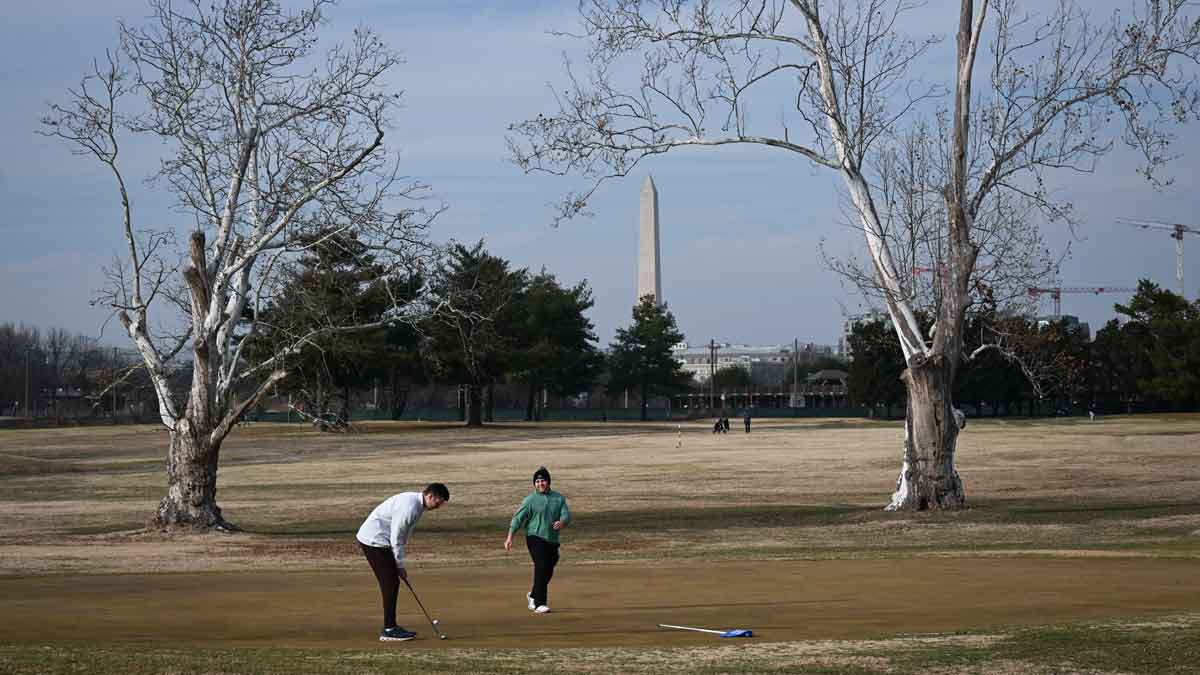
The future of East Potomac Golf Links, a century-plus-old municipal golf course on a manmade peninsula in Washington, D.C., has been a moving target in recent months. But on Thursday, the property’s development came into sharper focus when Interior Secretary Doug Burgum shared a rendering of a course design by architect Tom Fazio.
The plan shows a par-72, 7,660-yard 18-hole layout — including three new water features — that winds its way up and down the peninsula and, just north of the course, a practice facility and what appears to be a nine-hole short course. According to the rendering, an area south of the 18-hole course, extending to the tip of the peninsula, will be reserved for green space, which will come as some solace to those locals who worried that a new course would occupy the whole parcel.
Neither Burgum’s office nor Fazio immediately replied to GOLF.com’s requests for further detail on the renovation.
The project has been a source of intense debate and speculation among both D.C. golfers, who now can play the course for about $40, and preservationists, who are keen to protect the property’s 106-year-old history. Until recently, the National Links Trust — a D.C.-based non-profit — owned a 50-year lease to East Potomac and the city’s other two munis, Langston and Rock Creek, with plans to restore all three.
But in December, the Trump administration terminated the NLT’s lease, citing unpaid payments and the organization’s failure to make capital improvements in a timely fashion. The NLT, in a statement, said it was “in fundamental disagreement with the administration’s characterization of NLT as being in default under the lease.”
On Friday of last week, the administration pivoted its plan again when it announced that the National Parks Service would partner with several private and public entities, including the NLT, to begin “immediate renovations” of East Potomac, while handing back stewardship of the Langston and Rock Creek restorations to the NLT.
In that same statement, the NPS-led group pledged it would turn the properties “into the country’s premier public golf courses, while keeping them affordable and accessible for all.” In his Thursday tweet with the Fazio plan, Burgum doubled down on that promise, writing, “Like iconic public courses of Bethpage Black & Torrey Pines, East Potomac will offer locals — of the National Capital Region — championship-quality golf at affordable, highly discounted rates.”
Staff at historic D.C. muni in dark about Trump’s reported renovation plan
Affordable is, of course, a subjective term, and skeptics of the administration’s plans have been vocal about the potential for a complete redo and upscaling of the facility being accompanied by increased rates. Critics have surfaced other concerns, too.
“Zero public input,” Save East Po, an advocacy group, tweeted Thursday after Burgum shared the site plan. “The DMV community that uses this place every day was never consulted. Not once. That alone should disqualify any design from moving forward on public land.”
The group also criticized the reduction of 36 holes to 27 (“less access for the people who have used this place for generations”) and the new-look design seemingly paying little homage to the property’s roots (“you do not preserve history by bulldozing it”). Indeed, Fazio’s routing bears no resemblance to the original Walter Travis design.
The NLT said in a statement that it was “excited” by Burgum’s commitment to keeping East Potomac “affordable for local DC, Maryland, and Virginia residents. This pricing model is successful at great municipal facilities like Memorial Park in Texas and Bethpage State Park in New York, which serve as accessible, welcoming, and world-class community assets.”
President Trump has said little publicly about the development of East Potomac, though he did tell the Wall Street Journal in December, “If we do [the three courses], we’ll do it really beautifully.”
The post Controversial D.C. muni renovation comes into focus with design plan appeared first on Golf.