One of the biggest misconceptions in wedge play is that you have to do something special with your hands to make the ball check. Players try to cut across it, flip the clubhead under the ball or add excessive loft. What those types of players fail to understand is that spin isn’t a trick or gimmick. It’s simply the result of creating the right conditions between the clubface and the ball at impact.
Clean contact, clean grooves, enough speed and the proper amount of loft create friction. And friction is what allows the ball to grab the face, launch with control and spin when it hits the green.
That’s the connection between the first two parts of this series: strike gives you predictability, while spin gives you control. Check out Part 1 of our series here, or read on below for more on how to make the ball actually check when it hits the green.
How to make the ball *actually* check
Before worrying about your technique, look at what is actually contacting the golf ball. A combination of clean grooves, a dry clubface and a good lie gives you the best opportunity to create friction. Dirt, grass and moisture that get between the ball and the face and dramatically change how much spin you produce. That’s why you see good players constantly cleaning their grooves and paying attention to the lie before choosing a shot.
The ball matters, too. A quality golf ball with a softer cover will generally give you more greenside spin than a firmer distance-oriented But even with perfect conditions and optimal equipment, you still have to put the ball on the correct part of the clubface.
Look closely at the face of the wedge after a good shot. The goal is a predictable strike lower on the face and sometimes even airing on the toe side is preferred.
If the low point of your swing is inconsistent, your contact will be inconsistent. And when contact changes, spin changes with it. You might hit one shot that checks immediately and the next one that releases ten feet farther even though they felt like similar swings. Great wedge players remove that uncertainty by controlling where the club meets the ball and the ground.
Where many players get in trouble is that they try to use their hands to manipulate spine. They know they want the ball to stop, so they instinctively try to help it into the air. The handle slows down, the clubhead passes the hands and the player adds loft through impact. That typically makes both strike and spin less predictable.
Instead, set up in a way that allows the club’s loft to do the work. From a good lie, I want a relatively neutral setup with the body slightly favoring the lead side and the clubface extremely open (below, left).
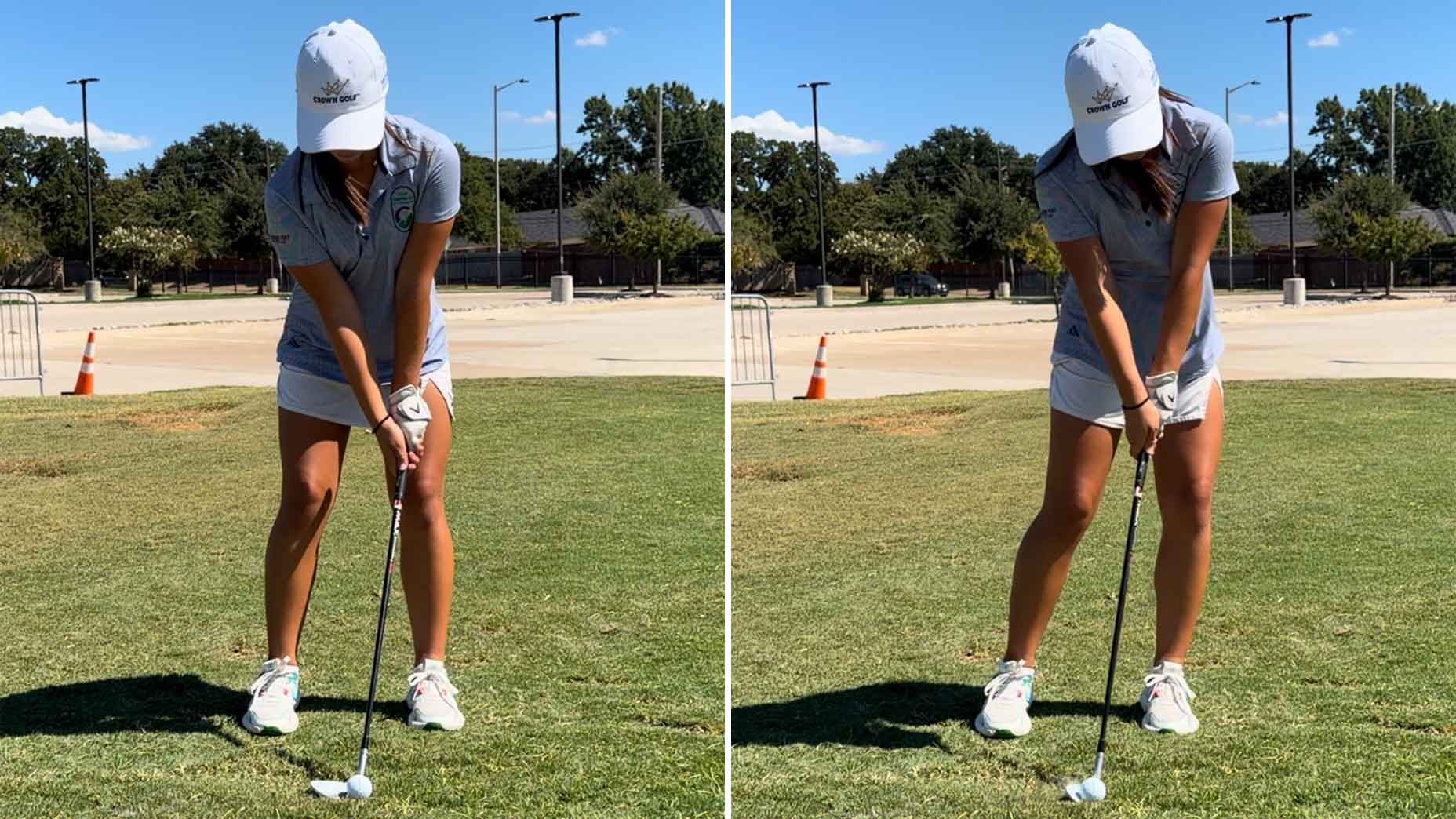
From there, rotate through the shot and allow the clubhead to keep moving. You don’t need to manufacture impact with your hands, if anything try to take as much loft off the club and keep leaning the shaft at impact. This is the part that matters the most because you are taking loft off the club!
Another misconception high-handciap players have is that they need to hit a spinning wedge softly. The reality is quite the oppostie. You need speed to create spin.
That doesn’t mean making a violent swing. It means allowing the clubhead to travel through impact with enough speed to create friction while maintaining your strike. Think about a good player’s wedge shot that flies relatively low, takes a bounce and then grabs. There is commitment through impact. The player isn’t decelerating because they’re afraid of hitting it too far.
That’s an important distinction: Control distance with the length of the motion, not by slowing the club down at impact.
Sometimes you want the ball to land and release. Other times you need it to take one bounce and stop. Great wedge players understand the lie, choose the appropriate trajectory and know approximately how the ball will react when it lands.
The post How to put spin on your pitch shots (the right way!), according to a top teacher appeared first on Golf.