Did you watch this Walker Cup at Lahinch, in Ireland? Maybe you were one of the 8,000 or so people on hand, watching up close. (Single-day tickets were about $50; kids were free.) Maybe you were watching on Golf Channel, with the American Curtis Cup star Emilia Migliaccio Doran and the former GB&I Walker Cup player Paul McGinley presiding. Poor McGinley, about the most refreshing voice in golf broadcasting today and an Irishman’s Irishman. He must be worn out. He was wearing his big heart on his green sleeve as he practically begged the home 10 to scratch out this half-point or that one.
In the end, his prayers were answered. In this 51st edition of the Walker Cup, the two-day event that unfolds with stunning speed, Great Britain and Ireland defeated a stacked American team, 13.5 to 12.5. Sunday afternoon, in the decisive singles play, GB&I won seven matches, halved two and lost one. GB&I won the event for the first time since 2015. It was amazing.
People will say that the GB&I golfers have more experience playing links golf. That might be true, but seven of the fellas play college golf in the U.S. In other words, they play a lot of their golf shots in the air, often hot, humid and still air, to soft and watered greens. People will say that the GB&I golfers have more experience playing alternate shot. Hmm. Nobody has much experience playing alternate shot.
Cypress Point, where last year’s Walker Cup was played, is at least kinda linksy. The Americans won, 17-9. In 2023, the Walker Cup was at the Old Course — you know, the original links course. The Americans won, 14.5 to 11.5. At National Golf Links, tumbling and firm and oh-so-Scottish, in 2013: America 17, GB&I 9.
What happened was . . . two spirited teams went out for two days of that’s-the-spirit golf, and as the former Walker Cup golfer Rory McIlroy has noted before, one of the most powerful, mysterious and exciting phenomena in all of sports was fully on display. A team on a roll. Any team. Any sport. What is there like it? What George H. W. Bush (41) liked to call the big mo. And that’s what happened Sunday at Lahinch, the so-called St. Andrews of Ireland, where golf has been played for more than 130 years.
Now would be a good time to recycle what McIlroy wrote the morning after the 2017 Super Bowl, when the Atlanta Falcons led the New England Patriots 28-9 after three quarters and lost in overtime, 34-28:
“What the Patriots did was the most incredible comeback I think I’ve ever witnessed in sports. The massive intangible of momentum was with the Patriots and the Falcons could do nothing to stop it. The thing that will stay with me from watching that game unfold was the total belief the Patriots had, and that all came from their two big leaders in Bill Belichick and Tom Brady.
“People call it getting ‘in the zone’ and I’m fortunate to say I’ve experienced it a few times on the golf course. It’s a massive sense of self-belief and conviction that, no matter what you do, things are going to work out in your favor. The power of the mind, I guess! When you’re on the other side of it, like the Falcons were, it’s only right to give yourself time to be upset and dejected. But in time, you can see the positives and pick apart the negatives so you can make certain those mistakes won’t happen again. They didn’t get to the Super Bowl for nothing.”
This guy would make a good TV analyst — and a good team captain, too.
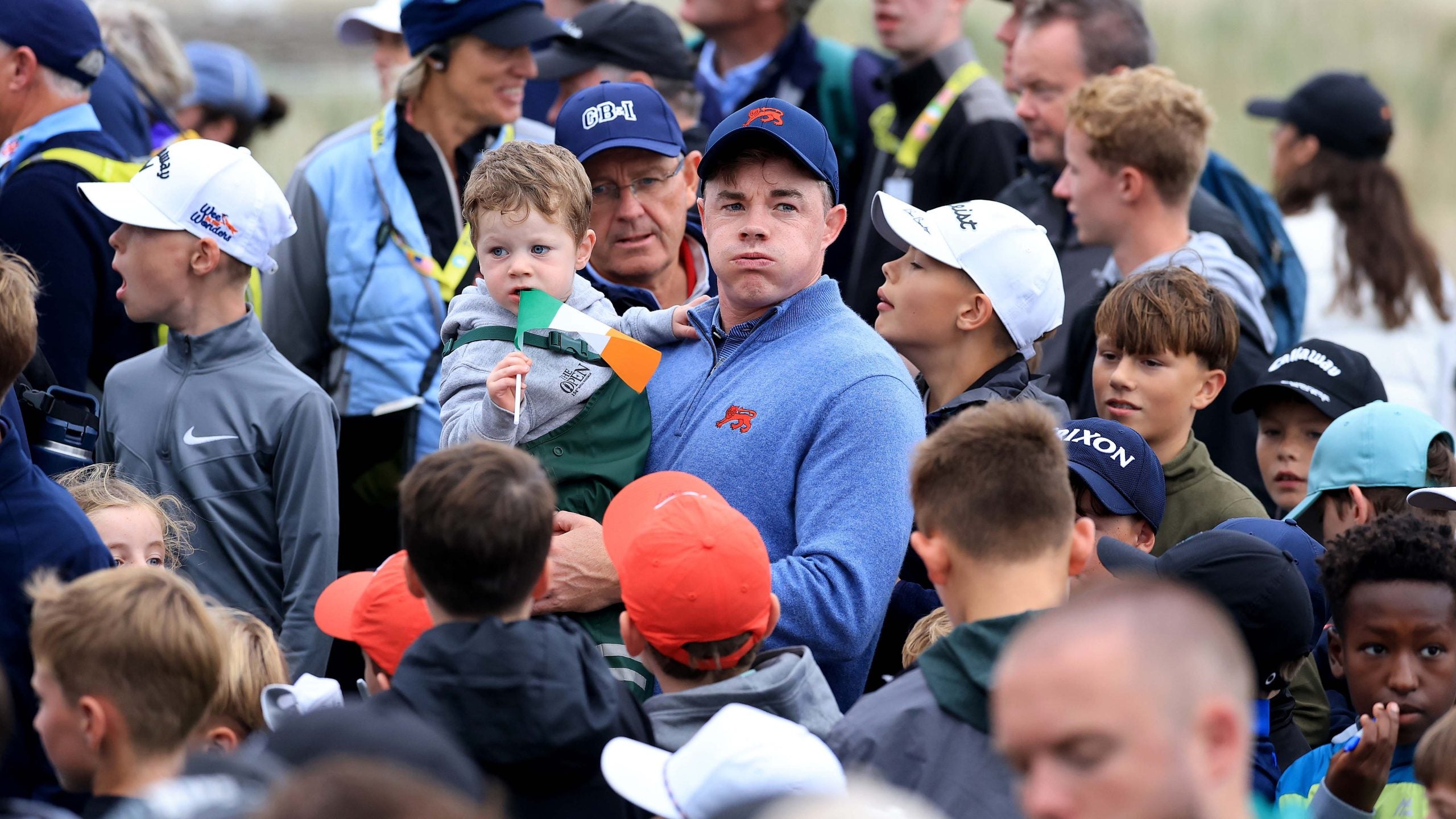
McIlroy’s final event of his short amateur career (he turned pro at 18) was the 2007 Walker Cup at Royal County Down, down the road from his childhood home in Holywood, Northern Ireland. The Americans won, 12.5-11.5, and he and Billy Horschel have been best friends ever since.
No, not really. Match-play golf is always personal.
OK, we’re straying here from the Sunday action at Lahinch. Suffice it to say, for here and for now, that what McIlroy observed with the Pats at the Super Bowl in 2017 is, in its own way, what happened with the GB&I team at the Walker Cup at Lahinch on Sunday afternoon. Blue (for the home team) was all over the board early, and on it went from there. The American first-aid kit did not have a tourniquet strong enough to stop the bleeding.
This was golf at its best.
In case you’re groggy:
THIS WAS GOLF AT ITS BEST!
Men’s professional golf, for many years and decades, was one of the coolest things on the world’s sporting stage because the golfers really, really seemed as if this most difficult and cerebral game meant more to them than the money they earned (not discounting that as a motivation). In recent years, a small group of elite male pros have disabused us of that notion. For years and decades, the Ryder Cup, featuring the best American pros playing the best European pros, was the biggest TV show in golf — until the players, the captains, the broadcast partners and the media in general started emphasizing all the wrong things, and the heart of the matter — match-play golf — got trampled.
In its place: the rise and rise of Walker Cup golf.
I realize this next part will seem to be sacrilegious to many, many golf purists. But the Walker Cup — which will be played in even-numbered years going forward, with Bandon Dunes next in 2028 — is in a great spot to become the greatest team event in all of golf. Because the Walker Cup is all about the golfers, the golf they play, the courses where they play it.
This is the part some people will despise: In the name of competitive balance and some other things, the GB&I team could be expanded to include amateurs from Continental Europe, just as the GB&I Ryder Cup team became the European Ryder Cup team in 1979. The lovely and quaint custom by which Walker Cup captains are amateur golfers themselves could be lifted, too. This year’s GB&I captain, Dean Robertson, is a professional golfer, but he was never a household name as a touring pro, to say the least. The Americans have generally had lifelong amateurs as captains, including Bob Jones and Fred Ridley, as well as the late Jay Sigel, who later turned pro.
But can you imagine Tiger Woods as an American Walker Cup captain? Or Rory McIlroy as a European Walker Cup captain? With the event at Pine Valley or Bandon Dunes or Portrush or St. Andrews? With a few months of buildup on Golf Channel and in golf publications so we can get to know these players before they enter the fray?
How good could that all be?
As good as this 2026 Walker Cup at Lahinch.
Michael Bamberger welcomes your comments at Michael.Bamberger@Golf.com
The post Is the Walker Cup golf’s greatest team event? It’s been making the case appeared first on Golf.