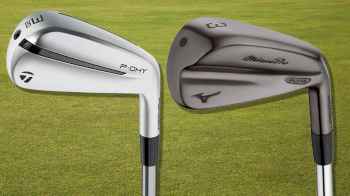
Welcome to Fully Equipped’s weekly Tour equipment report. Every Friday of PGA Tour weeks (plus other times, if news warrants), GOLF equipment editor Jack Hirsh runs you through some of the biggest news surrounding golf clubs on Tour, including changes, tweaks and launches.
Collin Morikawa is using the same blueprint that won him the Claret Jug in 2021.
At Royal St. George’s five years ago, Morikawa benched nearly his entire set of TaylorMade P730s for a set of P7MCs.
The idea was to utilize the P7MC’s narrow sole geometry to minimize his turf interaction and get the club to enter and exit the firm links turf as quickly as possible.
This year, he’s employing the same strategy, but how he got there was a little unorthodox.
To test which irons he would use for this year’s Open Championship, TaylorMade sent both to Morikawa and he hit them off a cart path at home.
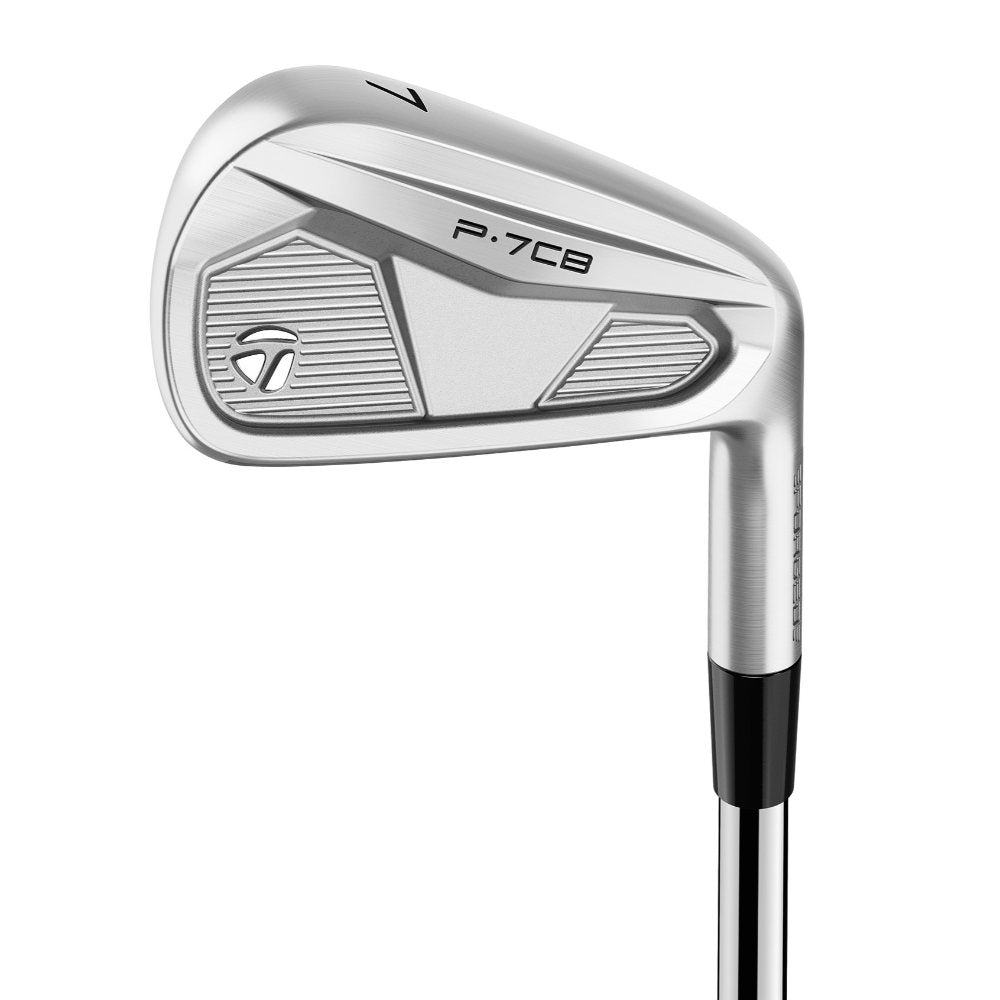
The first was a custom set of P7CBs with a unique sole geometry and leading edge grind.
“These changes were specifically designed to improve entry into firmer turf while maintaining enough effective bounce to prevent excessive digging,” TaylorMade Tour rep Adrian Rietveld said.
The other set was the MCs, which Rietveld said have one of the narrowest soles in the TaylorMade iron lineup. An iron with a narrower sole naturally presents less bounce and enters and exits the turf with little resistance.
“For players who deliver the club as precisely as Collin, this often creates a sensation of the club simply disappearing through impact rather than being redirected by the turf,” Rietveld said.
To decide between the two sets, he hit both irons off the cart path and then compared the marks on the sole with each.
View Product
ALSO AVAILABLE AT: PGA TOUR Superstore, TaylorMade
“While this may initially sound unusual, it actually provided an incredibly consistent testing environment,” Rietveld said. “Sliding each club along the firm path immediately highlighted exactly where the sole was contacting the surface. Every mark on the sole represented a point of ground interaction, allowing him to visually study how each grind, relief area and leading edge would engage the firm ground.”
The MCs produced fewer marks on the sole, indicating they had more predictable and cleaner ground interaction, which is what Morikawa and the Tour team expected.
As a result, Morikawa is playing a full set of P7MCs this week, 5-PW, in place of his normal P7CB/P730 combo while his PDHY 4-iron remains.
It’s ironic that old Golf Digest WITB spreads from the late 2000s and early 2010s have been trending around Twitter lately. The thing I keep noticing is many players played both 5-woods and 3-irons back then, while only playing three wedges.
For the Open Championship this year, it appears we’ve gone back in time to those setups.
We hear about the same two changes for links golf every year: swapping out fairway woods for long irons and low-bounce wedges. This year, there are plenty of those switches like normal, but some players are putting a unique twist on it by reverting to classic three-wedge setups to add more clubs to the top of the bag.
Last week in this space, we wrote about how Tommy Fleetwood made that move to keep his 9-wood in the bag along with a 3-iron.
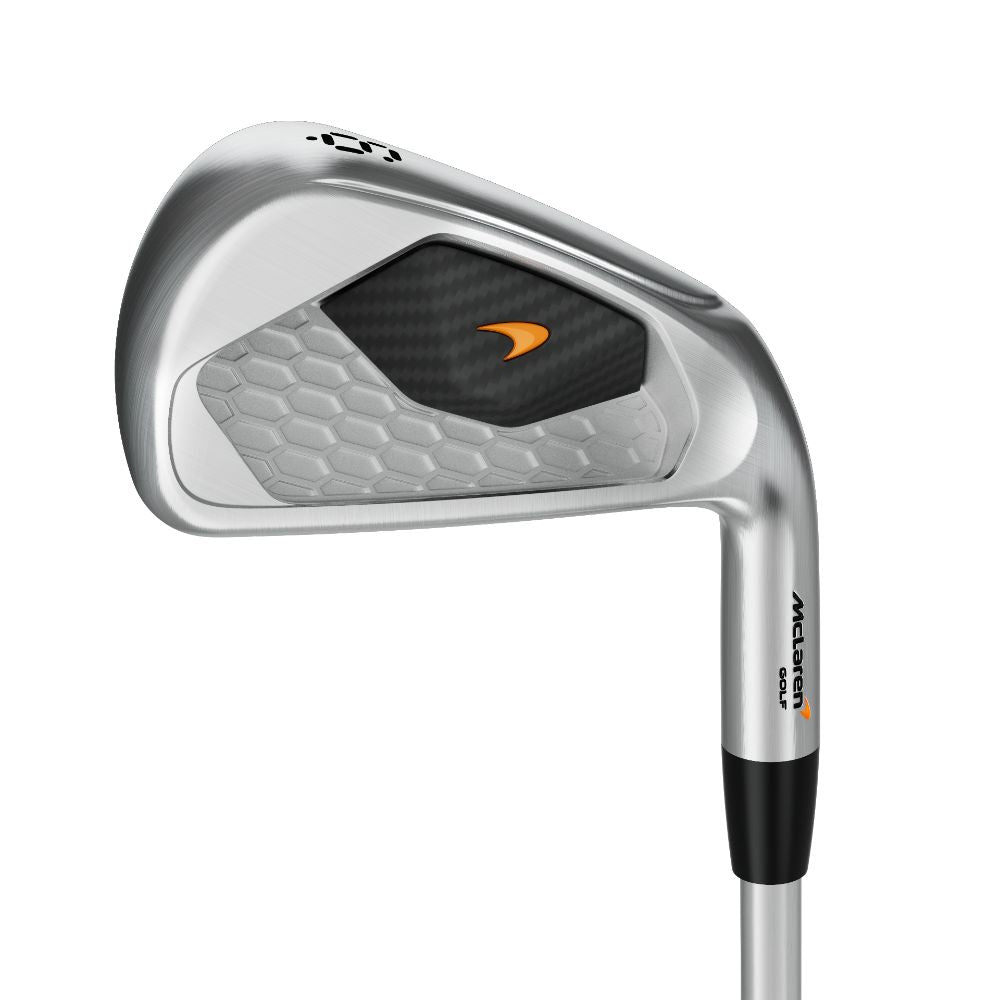
And this week, Justin Rose revealed he was dropping a sand wedge in order to add both a 2- and 3-iron to his bag. His T200 2-iron is the same one he used at the U.S. Open while the 3-iron is a new McLaren Golf Series 3 3-iron similar to the 4-iron he played when he debuted the new irons earlier this year.
“Typically, when I’m playing in America, I’ve got up to 4-iron and then a 7-wood into a 3-wood,” Rose said on Tuesday at an extremely baked out and dry Royal Birkdale. “Typically, I think my 7 was going to come out of the bag this week, and a 2-iron is going to go in. But I feel like that does leave me a bit of a gap on certain par-4s where you’re wanting to push the ball up as far as you can towards the bunkers. So I’m feeling a 3-iron as well as a 4-iron and 2-iron. I feel like I need all of the long irons, which means I’ve got to drop a wedge somewhere.”
View Product
Part of the reason most pros moved from three- to four-wedge setups is that iron lofts have gotten stronger over the years and a desire to have more options from scoring yardages.
But at a firm links golf setup, where some pros like Jon Rahm and Jordan Spieth have said 5- and 6-irons could run out to nearly 300 yards, Rose decided to add some extra precision to the top of his bag.
A hole that typically calls for a 3-wood or even a driver, it’s possible that a 2-iron might be too much in these conditions. By using the 3-iron, Rose preserves the ability to drive it as close to some of Royal Birkdale’s penal fairway bunkers without reaching them.
But while Rose is adding long-game options, Fleetwood is actually taking them away. With the extremely firm conditions and relatively light winds this week, Fleetwood said he removed the 3-iron he played last week and added his sand wedge back in.
“I feel as the course gets faster, I don’t really have a need for something that’s kind of hot, for me, so I took the 3-iron out this morning and put an extra wedge in again,” Fleetwood said after an opening-round 69. “Ended up being the same bag setup that I have normally.”
Links golf inspires many changes, but there’s always more than one way to go about it.
Bryson DeChambeau was at it again at a major championship, making big changes to his gear setup as he attempts to make his first major cut of the season.
The more notable change is that DeChambeau was playing with his TaylorMade Qi4D Proto 200+ driver for most of the week leading up to Thursday’s opening round.
It would have been hard to believe he would move out of that driver after leading the field in SG: Off the Tee at the U.S. Open through the first two rounds, despite missing the cut. But that’s exactly what happened.
After he was spotted with it a couple of times during the practice rounds, DeChambeau ended up moving back into his Krank Formula Fire Pro driver that he won the 2024 U.S. Open with. He put a Project X HZRDUS T1100 shaft in it instead of the Titan he played in the TaylorMade.
In his opening-round 67, DeChambeau hit just four fairways but led the field in SG: Off the Tee with 1.6.
That was far from the only move he made, as DeChambeau is finally gaming his custom 3D-printed irons bearing his own logo. DeChambeau has teased the irons he has been creating with his own team for months and even used a prototype 5-iron at the Masters.
He also went back to steel shafts, opting for the Dynamic Gold X7, one of the stiffest steel shafts available in his irons and wedges, abandoning the all-LA Golf graphite setup he’s employed for the last several years.
Unfortunately, we don’t have much insight into these changes as DeChambeau declined to speak to the media after his opening round Thursday and did not have a pre-tournament press conference.
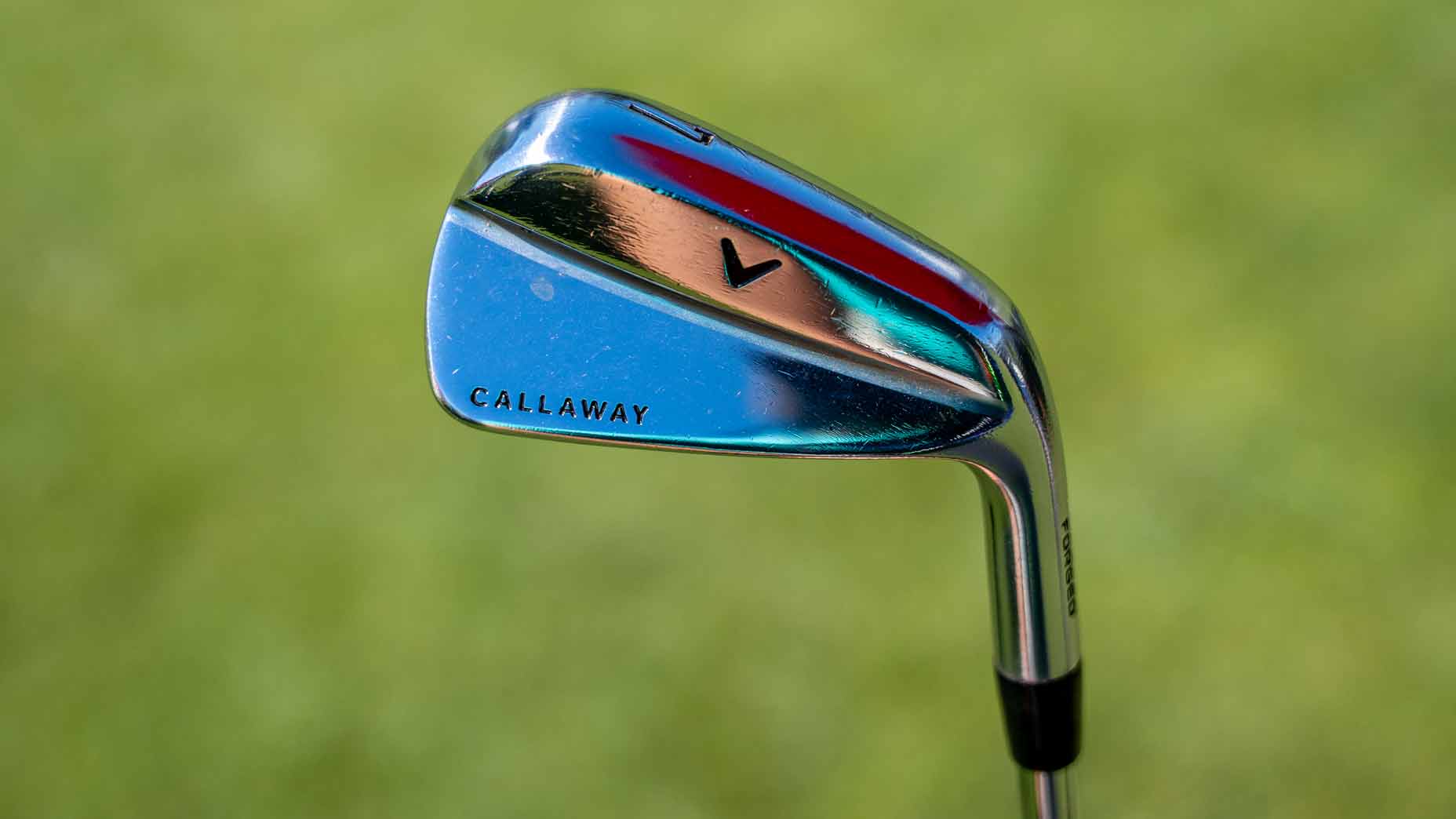
This section is dedicated to cool photos we’ve snapped recently on Tour, but haven’t had a reason to share yet. This week, check out Sam Burns’ Callaway Apex MB Prototype irons that he used to shoot 62 in Round 2.
Some other gear changes and notes we’re tracking this week.
Cameron Young switched driver shafts to a Mitsubishi Diamana Blackboard prototype … Mizuno launched its new Mizuno Pro S-4 cavity back iron … Marcus Plunkett replaced his mini driver with a Callaway Apex UW 15˚, becoming one of the first pros to add the unique loft option … Lucas Herbert played the opening round without a driver before adding it back for his second-round 62 … Cameron Smith switched out of his longtime Scotty Cameron 009M gamer for a new Phantom 3.5 mallet … Rickie Fowler’s fourth putter in four events is a Scotty Cameron Phantom 5 mallet … Ping had both the No. 1 driver model (Ping G440 LST) and iron (Blueprint S) … Si Woo Kim switched to a new Opus SP C-Grind lob wedge with 2 degrees less bounce … Michael Brennan added a Titleist U505 1-iron … Brennan was one of seven golfers, including Bud Cauley to go without any fairway woods … Cauley also added a Titleist U505 2-iron while Cameron Young, Alex Fitzpatrick and Patrick Cantlay added T250 3-irons and Patrick Reed and Jake Knapp added T250 2-irons.
A selection of GOLF content from the past week that may interest you.
Chris Gotterup’s Bridgestone irons are a rarity. Here’s what else is cool about his setup – Chris Gotterup has become one of the best players in the game by doing it in his own unique way. Whether that’s his swing, clubs or anything else, take a deep dive into his golf bag.
Jake Knapp gets fit for the PXG Lightning driver – Watch Jake Knapp go through the entire PXG Lightning driver lineup with Johnny Wunder to show which head is the best for him.
Tom Kim’s move back to Scotty Cameron blade putter proves worth it – Tom Kim won the Genesis Scottish Open after switching back to a Scotty Cameron blade putter earlier this season. He’s only the second player to win with a blade putter this year.
The author welcomes your comments at Jack.Hirsh@golf.com.
Want to overhaul your bag in 2026? Find a club-fitting location near you at True Spec Golf.
The post Why Collin Morikawa tested irons off a cart path for The Open appeared first on Golf.