
True to form, Cameron Young arrives early and well prepared.
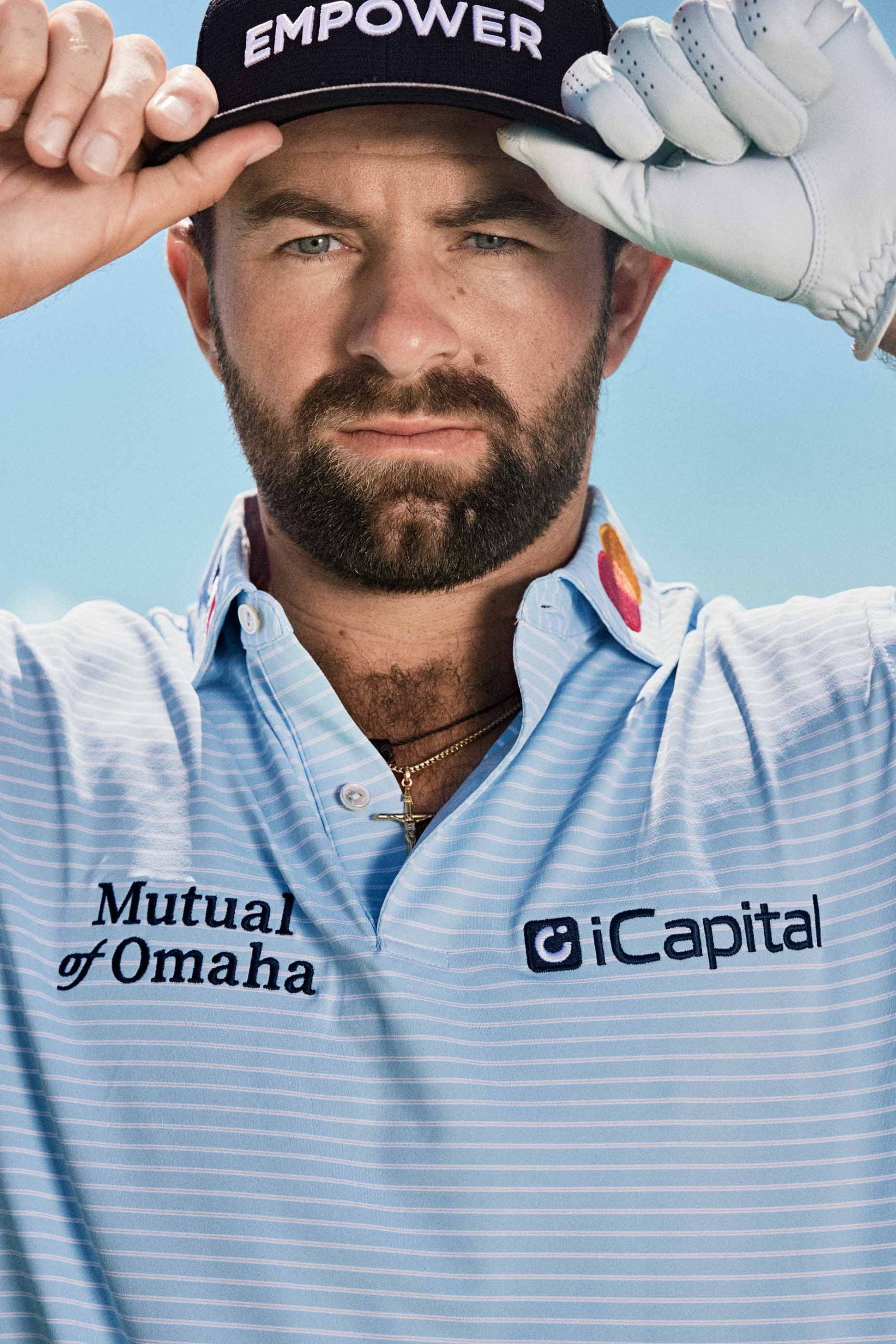
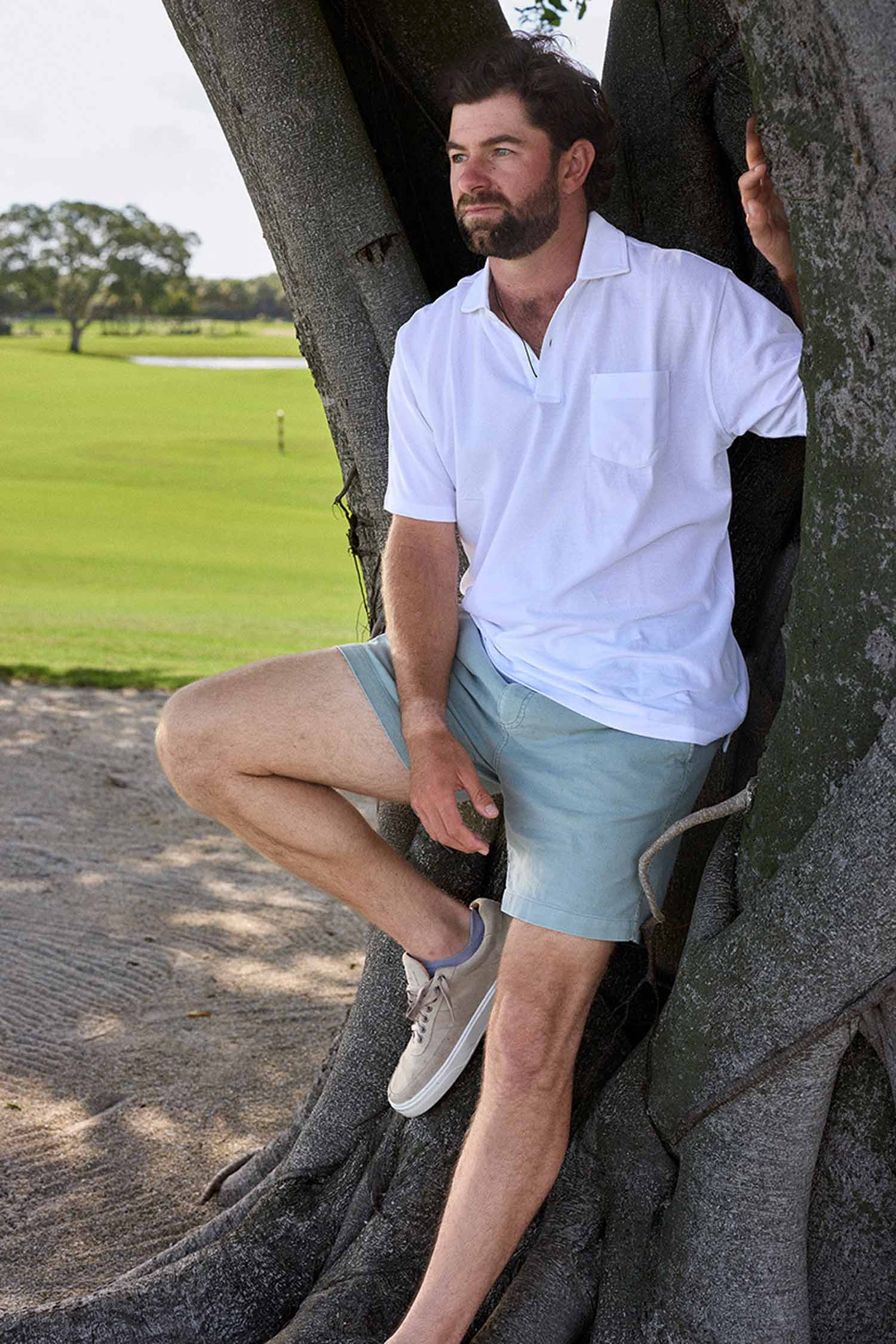
Our production crew is finishing its setup behind the clubhouse at Dutchman’s Pipe, a well-to-do West Palm Beach golf club just a few miles south of Young’s home, when the cover star himself, the third-ranked golfer in the world, pulls up in a cart and offers a wave to our photographer. He looks more casual than we’re accustomed to seeing him at Tour events, wearing an unbuttoned white polo untucked over gray shorts. Several hangers swing from the back of his cart.
“I brought options,” he says sheepishly, gesturing to a handful of logoed golf shirts and checked button-downs. He hops from the cart and shakes hands with each member of the GOLF team. For the next couple hours, he’s engaged and engaging — direct and forthright through a photo shoot, a sit-down chat and a one-sided battle with a bucket of balls.
That Young is here at all is an encouraging sign for those of us intrigued by his game and what makes him tick. His first several years on Tour were marked by a Teddy Roosevelt — like approach to the media and his on-course performance, speaking softly and carrying a big stick while leaving us to guess the rest. We got to know him, in part, from what we saw on TV — the beard, the game-time scowl, the prodigious power, the trademark pause at the top of his backswing — but not much else. Young seemed, from the outside, a reluctant star, notably declining to create even an Instagram account — almost unheard of in this multi-platform, brand-building era.
So who is Cameron Young? Let’s start here: He was born in New York’s Westchester County and now lives in Palm Beach Gardens, Fla. He doesn’t care if you call him Cameron or Cam. He and his wife Kelsey have two boys and a girl. They travel just about everywhere together. He’s quicker to smile in real life than in competition (or photos). His teammates at Wake Forest included Will Zalatoris and Alex Fitzpatrick. He’s sponsored by Major League Baseball but doesn’t watch much Major League Baseball. His first pro tournament win came as an amateur, at Bethpage Black, at the 2017 New York State Open. Last year he became the 1,000th unique winner in PGA Tour history. Before the biggest drive of his life, he gave himself the first pep talk of his life. As he hit the biggest one-foot putt of his life, he couldn’t feel his hands.
Thanks to his series of breakthroughs on the game’s biggest stages — his long-awaited first Tour win at the 2025 Wyndham; a starring role a month later at the Ryder Cup; victory at this year’s Players and a validating follow-up win at the Cadillac Championship; his ascent to World No. 3 — something has changed.
He’s being asked better questions and giving more interesting answers. The door has cracked open a bit wider, offering glimpses of the 29-year-old on the rise, of where he came from and how he now finds himself among the game’s elite.
YOUNG’S ORIGIN STORY will make you nostalgic for a childhood you never even had. You can picture how he would have looked: the little kid at the big golf club, chasing his ball into the fading sun, not a care in the world besides impending dusk, night after night after night.
“It was a dream place to grow up,” Young says.
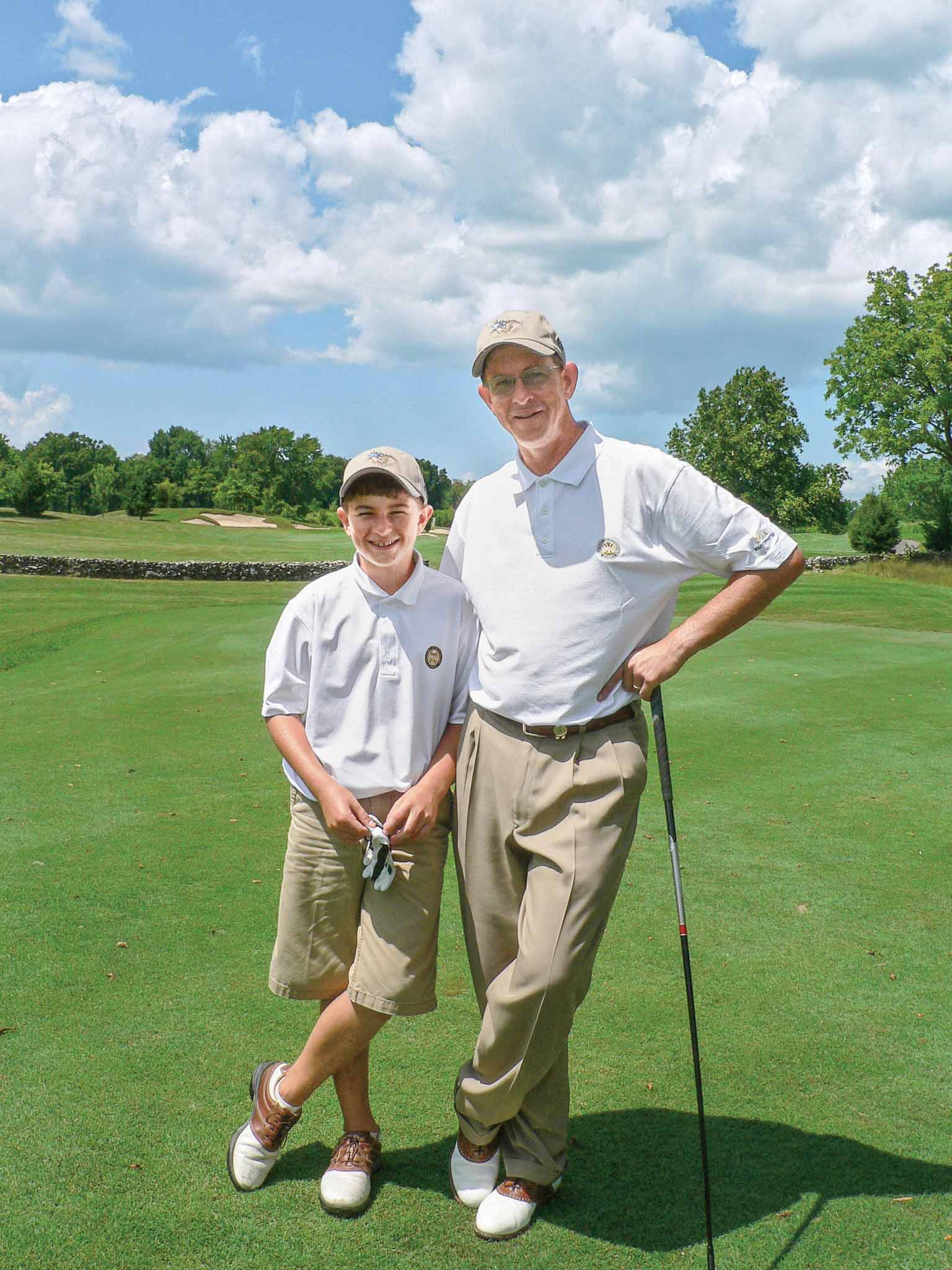
That dream place was Sleepy Hollow Country Club, where his father, David, took the head pro job when his son was three or four.
“By that point, I already loved going out there and smacking it around.”
Sleepy, as it’s known, is a landmark club just north of New York City, famous for its Golden Age course design, Vanderbilt-mansion clubhouse and entrancing Hudson River views. It’s rarefied turf, but Young felt welcomed from the start. His father or his mother (Barbara, an accomplished player too) would take him out to play nearly every evening, and he could chase to his heart’s content.
About a decade into his dad’s tenure, the family moved on property, into a house off the fourth hole of Sleepy’s nine-hole short course. Cam developed a ritual: He’d take the train home from school, change into his golf clothes and head straight out.
“I’d get out on the course as much as I could, especially late in the afternoon — see how many holes we could play,” he says. “It’s one of the most beautiful pieces of [land] you could ever find.”
He continues to get membership emails. That’s how he knows about the occasional watch parties and clubhouse meetups supporting the kid who climbed to the top — even as every rung of the ladder brings a reminder that he’s not that kid anymore.
A YEAR AGO AT THIS TIME, Young’s career was still defined — at least publicly — by what he hadn’t quite accomplished. He’d jacked up expectations with a red-hot rookie year in 2022 but still hadn’t been able to win a PGA Tour event. Sure, he’d almost gotten across the line, dating back to that Rookie of the Year campaign and its extremely near-misses at the PGA Championship and Open Championship as part of a season with seven top-three finishes. But no dice. He also hadn’t made a Ryder Cup team, and even that omission barely registered. When the 2023 U.S. team was announced, the spotlighted snub in Netflix’s Full Swing was Keegan Bradley, who’d finished 11th in qualifying, while Young, 9th in the standings, was passed over with significantly less fanfare.
By those lofty standards, he floundered in the years that followed, sliding from top 15 in the world to outside the top 50. By early 2025, he was off the Ryder Cup radar for Bethpage Black, the course and career goal he’d circled since high school.
But then he made changes — some essential, others sharpened by experience — that added up to something special.
Young changed caddies. After shuffling through a series of more established loopers, he passed his bag to Wake Forest pal Kyle Sterbinsky.
“Some of it is just grinding through tougher times and finding better ones,” Young said at the time. “[Kyle is] one of my best friends, a college teammate, and he’s great at reading greens.” Whatever the alchemy, the results were immediate: his putting stats soared, as did his iron play — and his scores dropped accordingly.
Young changed ballflights. Rather, he committed to a single ballflight. Instead of adjusting from shot to shot, he decided to lean into the draw he’d grown up with around Sleepy, a return to his swing DNA. “You watched Tiger in his prime and he hit all of them. Every shot,” Young says. “And, in theory, if you want to be as good as you can be, you want to be able to hit every shot. But for most people, it probably just isn’t practical.”
Young tweaked his mindset too, choosing to think bigger picture and stating plainly his intention to make the Ryder Cup team at Bethpage. With that as his North Star, everything else found its place.
Finally, he changed his golf ball, putting a mysterious Titleist Pro V1 prototype into play ahead of the 2025 Wyndham, which immediately helped him flight the ball better and control his distance accordingly. It had the desired effect. In his first week with the new rock, Young won the event by six strokes, putting an emphatic end to the chatter about his conspicuous winless streak on Tour.
To hear him describe it, it all was a massive relief.
“It was nice to just not have it be the conversation anymore,” Young says.
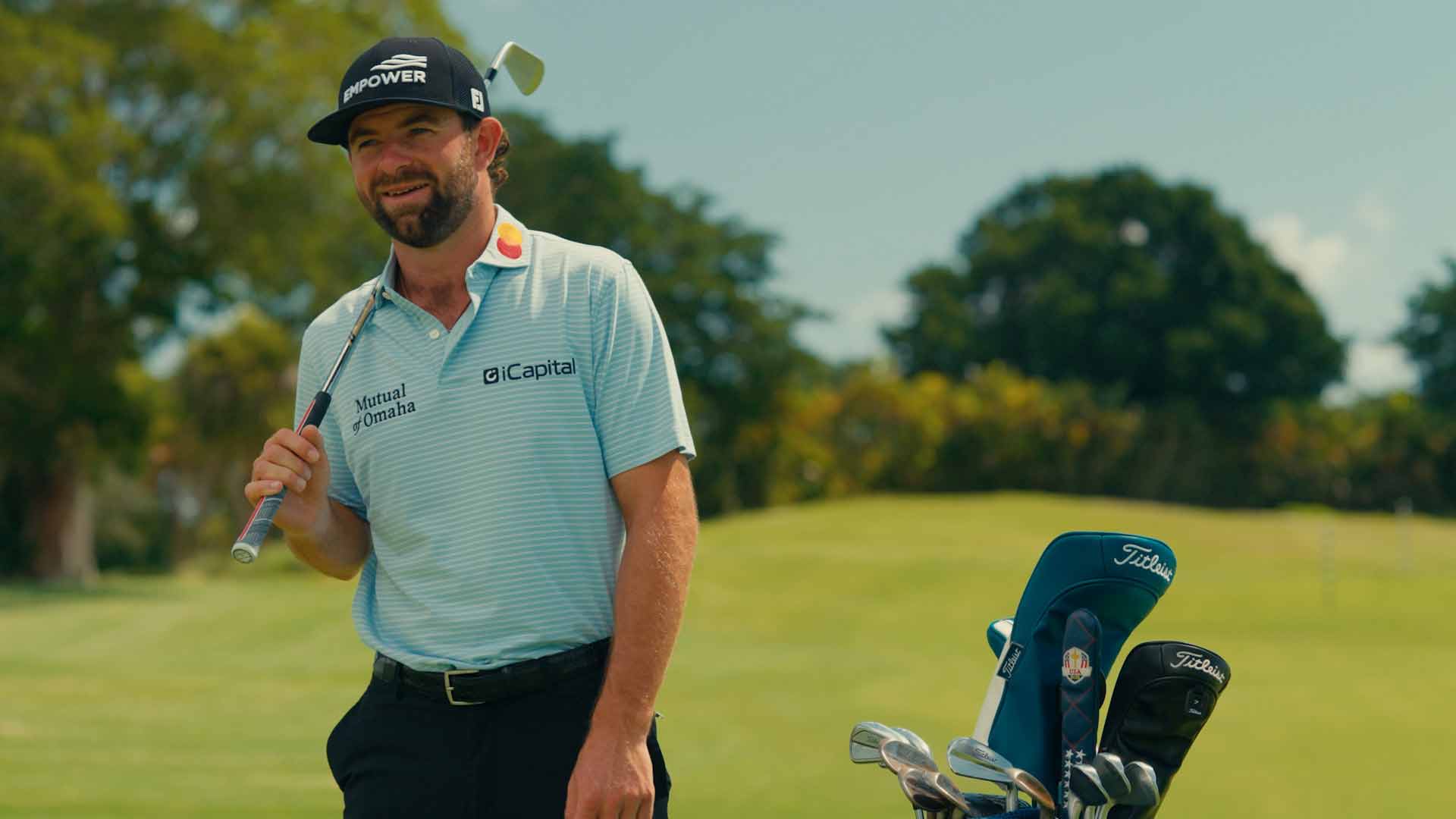
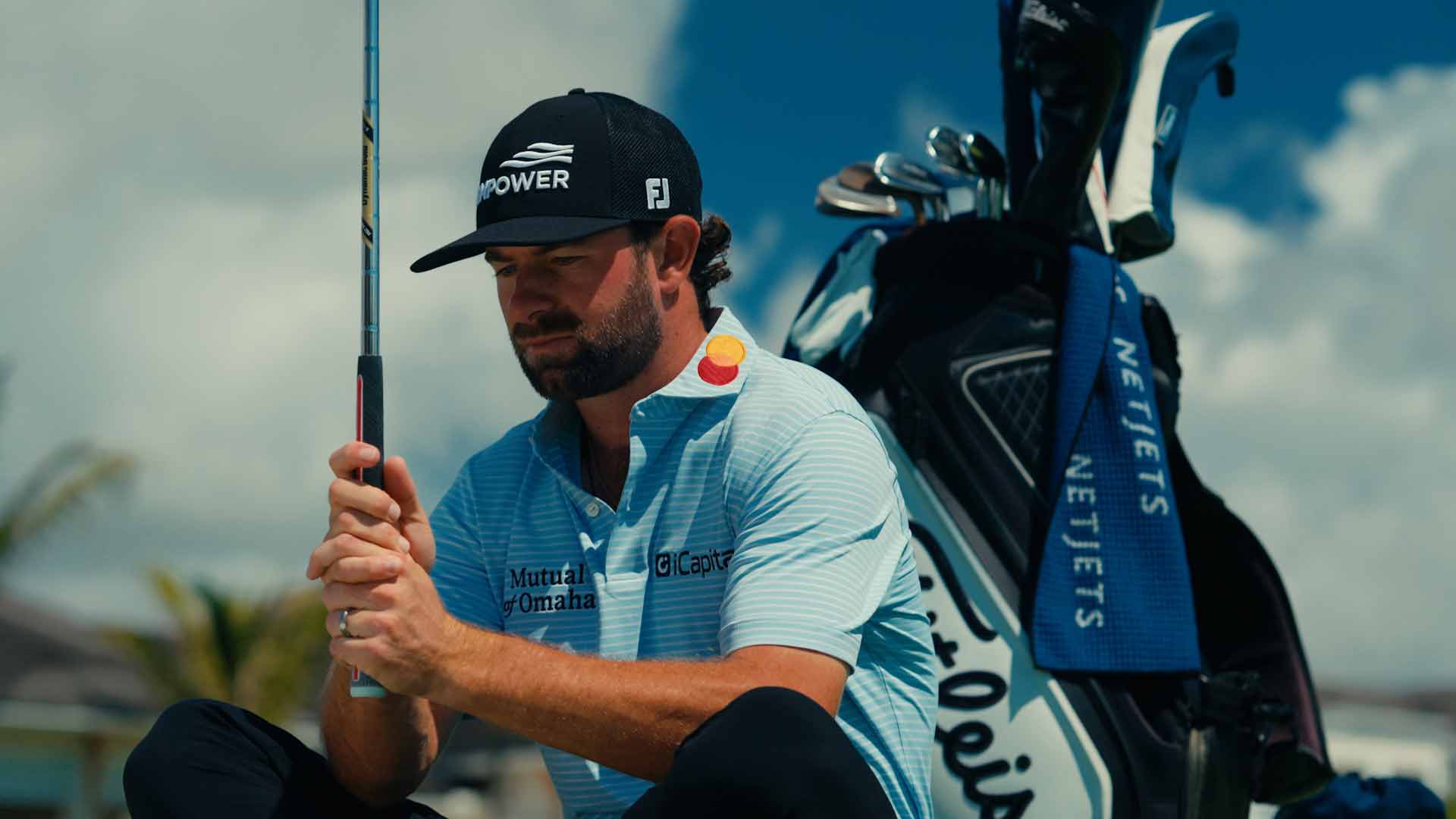
THAT FIRST TOUR TRIUMPH proved to be a springboard. Young finished fifth the following week, 11th a week later and T4 at the 2025 Tour Championship, earning a Ryder Cup captain’s pick in the process.
He acquitted himself so well in the first two days at Bethpage that U.S. captain Keegan Bradley sent him out first in Sunday singles in front of his New York faithful. He finished a back-and-forth showdown against Justin Rose with a must-make birdie putt on the 18th green for a 1-up victory and the biggest fist pump of his golfing life, knowing he’d toppled the first domino in a rowdy comeback that the U.S. side nearly pulled off.
“It was maybe more rewarding, in a sense, to make the putt on Sunday knowing that there was another guy behind me and one behind him and another one behind him,” Young says, remembering the momentum. His 3-1-0 record was Team U.S.A.’s best.
In early 2026, Young picked up where he left off in 2025, finishing T7 at Riviera and T3 at Bay Hill before unleashing late heroics at TPC Sawgrass, where he chased down Sunday’s leaders, birdied the island par-3 17th, stepped to the terrifying 18th tee with a pep talk to himself — I’m going to hit the best shot of my life right here — and pummeled the longest drive in the hole’s recorded history. When he won the Players Championship outright (Matt Fitzpatrick bogeyed No. 18, the sort of help he’d never seemed to get from competitors in the past) the tee shot seemed emblematic of this new, assertive, self-believing Young — a golfer in full.
There were still more positive signs at the Masters. Young’s first point of pride was bouncing back from four bogeys in his first seven holes on Thursday to ultimately finish the event T3 behind winner Rory McIlroy and runner-up Scottie Scheffler. McIlroy-Scheffler-Young, at the biggest tournament on the calendar? Company noted.
Two starts later, Young won again, six shots clear of second-place finisher Scheffler at the Cadillac Championship.
“I’m just playing better,” he says. “And I think you could argue all day about which piece has influenced that the most.”
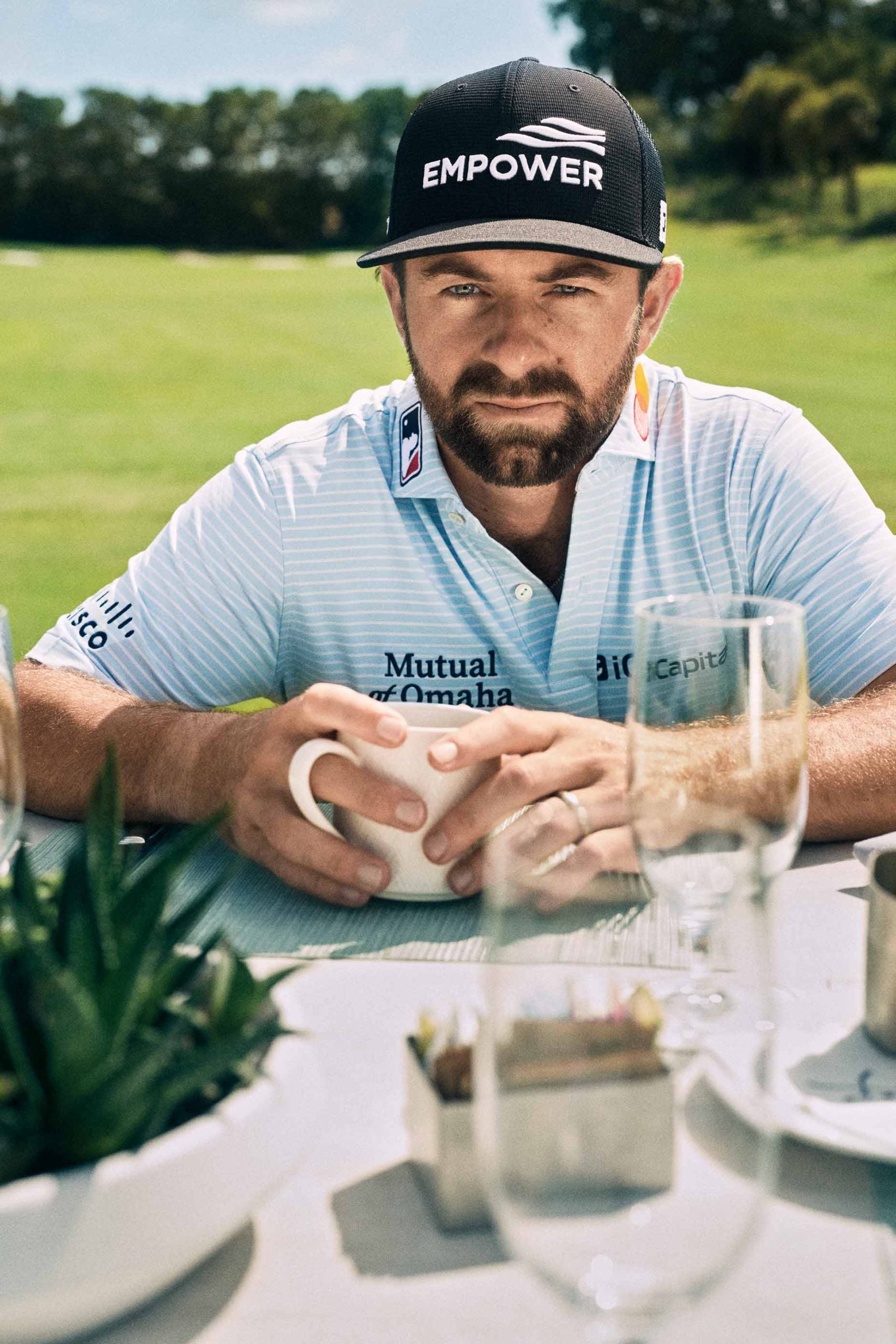
THERE ARE PERKS that come with joining this club, with winning, with making the Ryder Cup, with being the world’s third best player. Youngarrived on Tour as something of a loner. Now he talks about playing at home with Sunshine State neighbors Justin Thomas, Xander Schauffele, Patrick Cantlay, Keegan Bradley and more.
Still, winning isn’t the game changer he imagined it to be.
“I always thought, If I can just get to top 10 in the world, things will be easier. And they’re not,” Young says. “You still start over every day, every week. I have a better handle on what I’m doing and how to approach things than I did probably a year or two ago. But, like, is it easier? Less stressful? No. I mean, golf is still really hard. You still have to hit all the shots. So,yeah, my self-belief is higher. I have more tools to deal with things that come my way. But at the same time, it doesn’t feel as different as I would have thought.”
Nevertheless, full-circle moments keep materializing. His three- and four-year-old sons have begun taking an interest in golf at about the age their father was when he first toddled along the fairways at Sleepy. Recently, on a whim, Young’s wife asked the boys if they wanted to go to the golf course.
“I thought it would be five minutes, and they’d get bored and go do something else,” Young says. “But they sat there and hit balls forever. We went and had lunch, then they both said, ‘Can we go back out and hit more?’ ”
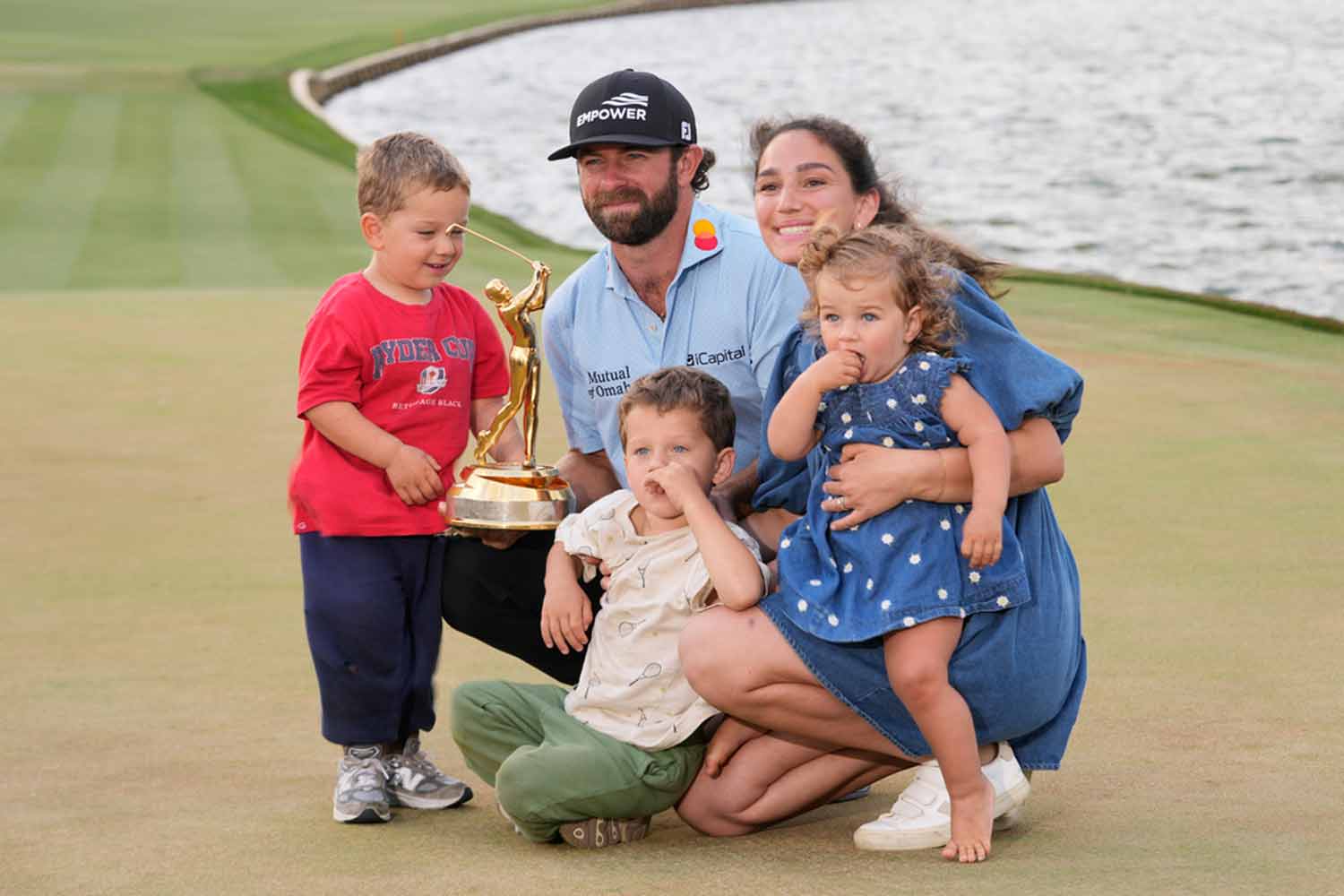
The Youngs travel everywhere as a unit, an achievement in patience and logistics Cam credits to his wife, Kelsey. Their presence makes weeks on the road more meaningful — even if it has the effect of ratcheting down post-win celebrations.
“My wife does a family photo album each year,” Young says. “And in this year’s, we have a picture from the Players, late that night, while I was still [at TPC Sawgrass]. Right next to it is a picture of our kids on swings at the park. The two pictures are taken, like, 11 hours apart. We drove home in the rain [from Sawgrass to South Florida], fought the kids to bed, then got up and they were ready for the park. And we’re like, ‘Okay, let’s go.’ ”
With family his first priority, Young has had to double down on fundamentals, on discipline, on managing time and energy. “It’s not glamorous and fun, but simple is the most effective [approach], I think,” he says, adding with a chuckle: “In our household, we joke about ‘being committed to your process,’ whatever it is. Making eggs, whatever.”
Outside the house, Young’s process is focused on making birdies. Does he still love the game? He does. But to get the most out of himself, he’s learned to treat it like a job.
“To be good at golf, I probably do a lot more things now that I don’t love,” he says. “I love the process of trying to get better, but it doesn’t mean I love endlessly hitting putts on a chalk line with a mirror.”
Does he ever chase daylight for old time’s sake?
“This past December, for probably the first time in three years, I played one round of casual golf with my friends,” he says. His Wake Forest teammates were in town for a wedding.
And that was that. But he’s at peace with the trade-off.
“I talk to my wife about this on a relatively regular basis, just making sure that we stop and appreciate where we are,” Young says. “It’s much easier to do when things are going well, but [it’s important] even if I was playing poorly. It’s been my dream to compete on the PGA Tour, really, for a very long time. And the opportunity to do that is something to be grateful for.”
Young knows he’s raised expectations. That winning is now the standard, that the question When will he win? has been ramped up to When will he win a major? That’s okay. He’s comfy there: under pressure late on a Sunday, the best players around him, the world watching.
It’s a chance to remind himself of the thing he learned as a kid: It’s good to be on a golf course, late in the afternoon, with something to chase.
Dylan Dethier welcomes your comments at dylan_dethier@golf.com.
The post Inside Cameron Young’s breakthrough: How golf’s intriguing star joined its elite appeared first on Golf.