Tour players change equipment all the time. Drivers come and go. Fairway woods rotate in and out of the bag. Wedges get swapped based on turf conditions, weather and feel.
Putters are different.
Especially when we’re talking about a player like Ludvig Aberg.
Aberg has moved away from the Odyssey Ai-One #1 blade that had become one of the most recognizable constants in his setup and into a Scotty Cameron Phantom 3.2.
View this post on Instagram
At first glance, it looks like another Tour player testing another putter. I don’t think it’s that simple.
What’s interesting isn’t that Ludvig changed putters. Tour players do that all the time. It’s that he changed his type of putters.
For years, Aberg was one of the rare elite players who resisted the industry’s migration toward larger, more forgiving mallets. While Tour vans filled up with Spider putters, Jailbirds and every high-MOI shape imaginable, Ludvig stayed committed to a traditional blade.
That tells you something about what he likes to see.
Players at that level don’t accidentally stick with a putter for years. They trust it. They understand exactly how it reacts. They know what a good stroke feels like with it — and a bad one. Use Scottie Scheffler as another example a couple of years back, going from his Scotty Newport 2 into a Spider Tour X. It was a life-changer.
So when a player with that kind of loyalty makes a significant change, I pay attention.
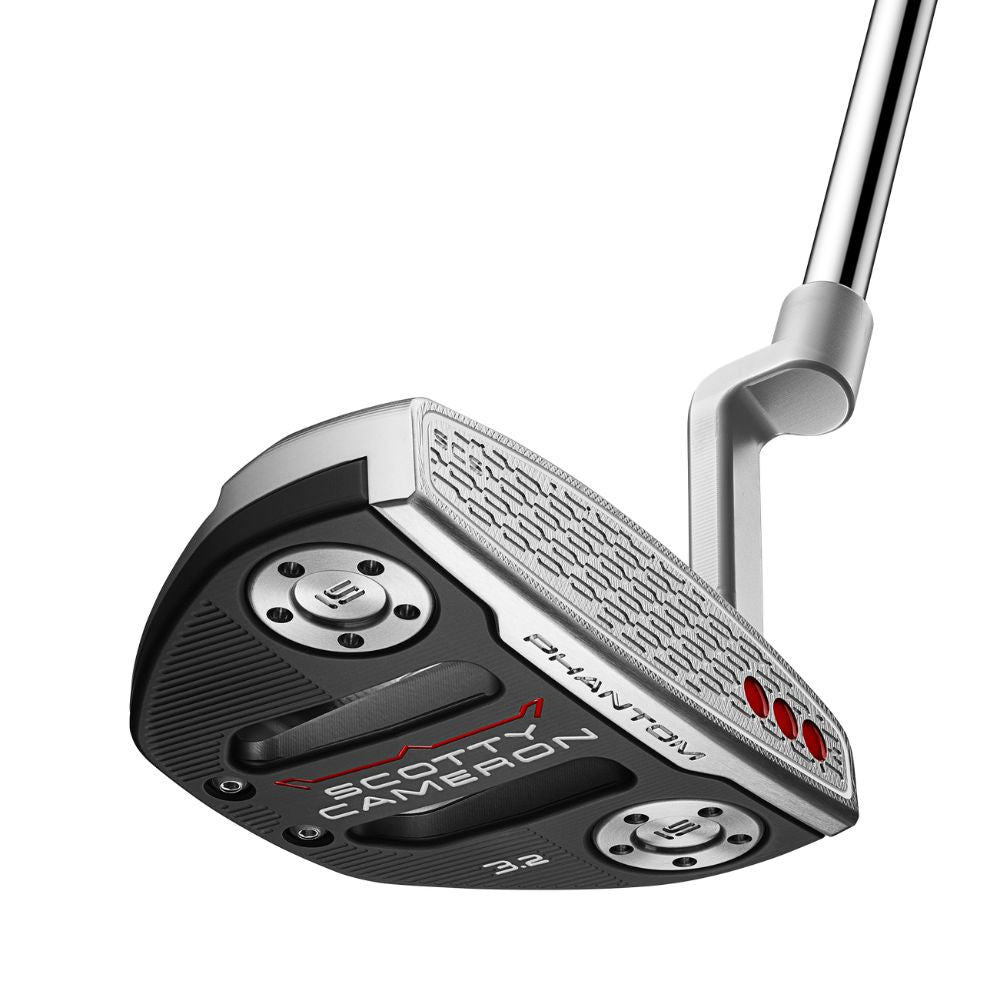
View Product
The Phantom 3.2 is an interesting choice because it sits somewhere between a traditional blade and a modern mallet. It offers more stability and forgiveness than a blade, but it doesn’t completely abandon the look and flow that many blade players prefer. At the U.S. Open this week, Tour rep Brad Cloke explained that the Phantom 3.2 fit Ludvig’s eye. That might sound insignificant to the average golfer, but it’s usually the entire story.
One thing I’ve learned from spending time around Tour reps and Tour players is that putter changes are rarely about technology. They’re almost always about comfort.
Nobody suddenly discovers a magic putter when they’re one of the best players in the world. The technology gains at that level are marginal. What players are searching for is confidence. Better visuals. Better alignment. Less stress standing over a six-footer that matters.
That’s where this move gets interesting.
Earlier this season, putting wasn’t exactly a strength for Aberg. Entering the Players Championship, he ranked 91st on the PGA Tour in Strokes Gained: Putting at just +0.014 strokes per round. Fast forward a few months and that number has improved to roughly +0.227 strokes gained per round, moving him comfortably into the top half of the Tour.
Now, I’m not suggesting the putter deserves all the credit. Golf isn’t that clean. Better speed control, improved confidence, course fit and simple variance all play a role. But when a player changes putters and the results trend in the right direction, it’s at least worth paying attention. And honestly, the move makes a lot of sense.
Nobody is looking at Ludvig’s golf swing and suggesting he needs a rebuild. Nobody is questioning the ball striking. If you’re searching for incremental gains at his level, putting is usually the most logical place to look. The best players in the world aren’t chasing wholesale changes. They’re chasing fractions.
A slightly better start line.
A little more forgiveness.
A touch more confidence.
Over a season, those tiny improvements become meaningful. Millions-of-dollars meaningful. What I find most fascinating is that this feels less like a player abandoning his identity and more like a player evolving it. For years, the equipment conversation in professional golf was framed as blades versus mallets, traditional versus modern. That’s not really how Tour players think anymore.
They want whatever helps them perform. If that means a mini driver, they’ll use a mini driver. If that means a 7-wood, they’ll use a 7-wood. And if that means moving from a blade into a shape that offers a little more stability while still looking familiar, they’ll do that too.
The obvious question now is whether the switch sticks.
Tour players are ruthless. If something isn’t helping, it doesn’t get a six-month grace period. It disappears. That’s why the next few months will be more telling than the first few weeks. But regardless of what happens, I think there’s already a lesson here for the average golfer.
Too many players become loyal to categories instead of results. They’re “blade guys” or “mallet guys.” They’re attached to what they think they should play instead of what actually helps them score. One of the best young players in the world just showed a willingness to challenge his own assumptions.
That’s usually where improvement starts.
And if a player as loyal to his putter as Ludvig Aberg is willing to make that leap, maybe the rest of us should be a little more open-minded too.
The post Ludvig Aberg’s major gear swap is a lesson for the rest of us appeared first on Golf.