The next time you’re parked outside the ropes (or on the couch) watching your favorite tour pros on the range — analyzing their routines in hopes of stealing something for your own game — look past the obvious. Instead of getting swept up in flashy training aids or complex drills, shift your focus to one of the most important aspects of the game: the grip.
More specifically, how they put their hands on the club.
John Scott Rattan, a GOLF Top 100 Teacher, recently revealed the fast and easy trick tour pros use to set their hands. It’s known as a stand-up grip, and it’s a simple way to check your clubface position at address.
View this post on Instagram
“You watch Scottie Scheffler every day on the range doing something like this to check his grip, so the face is square,” Rattan says.
When done correctly, this quick grip check can improve the quality of your strikes in a major way. Here’s how Rattan teaches it — and how you can use it in your practice sessions.
To do a stand-up grip check, begin by taking your normal setup. From there, stand up without adjusting your hands on the club. Fully extend your arms as you raise the club until it’s straight out in front of you, almost parallel to the ground.
Now, unhinge your wrists while maintaining your grip. It should feel like your hands tilt forward as the weight of the club settles into them. If you’re doing it right, the butt of the club will point at your face and the clubhead will drop slightly — falling directly down your eyeline. This will give you a clear look at your clubface position and allow you to identify any manipulations you’re unknowingly making at address.
Before you can diagnose a problem or apply a fix, you need to know what to look for when checking your clubface in the stand-up grip. To make it easier, Rattan suggests a simple visual: think of the clubface like a clock.
Square – 12 o’clock
Closed – 11 o’clock
Open – 1 o’clock
The stand-up grip can also reveal a player’s habits and tendencies. One of the most common faults Rattan sees from amateurs during this drill is starting from a poor position.
“The face is king in the game,” he says, “So if the face is bad at the start, you gotta make a compensation somewhere.”
For example, many amateurs unknowingly set up to the ball with a closed clubface. According to Rattan, when you twist the clubface closed — or left, for right-handed players — it signals to your brain that you’ve taken loft off the club and, unless you’re intentionally trying to hit a low shot, will need to add it later in your swing.
This can lead to compensations like swinging to the right excessively or throwing the hands late to regain loft. And if you aren’t able to add loft back in, that’s when the dreaded low-and-left miss can sneak up on you.
“If we start with it [the clubface] square, then, in the downswing, we have incentive to take loft off of the club, rather than add loft to it,” he continues, “So, you want to have incentive built in.”
In addition to the stand-up grip, Rattan says there’s another clever trick you can use to set your clubface square like the pros.
“Put it [your clubface] up to a right angle and grip it,” he says, “Xander Schauffele does the same thing.”
By using either the stand-up grip or the 90-degree method, you’ll set your clubface square every time and train your eyes to recognize what a square face looks like—helping you spot any manipulations before they wreak havoc on your swing.
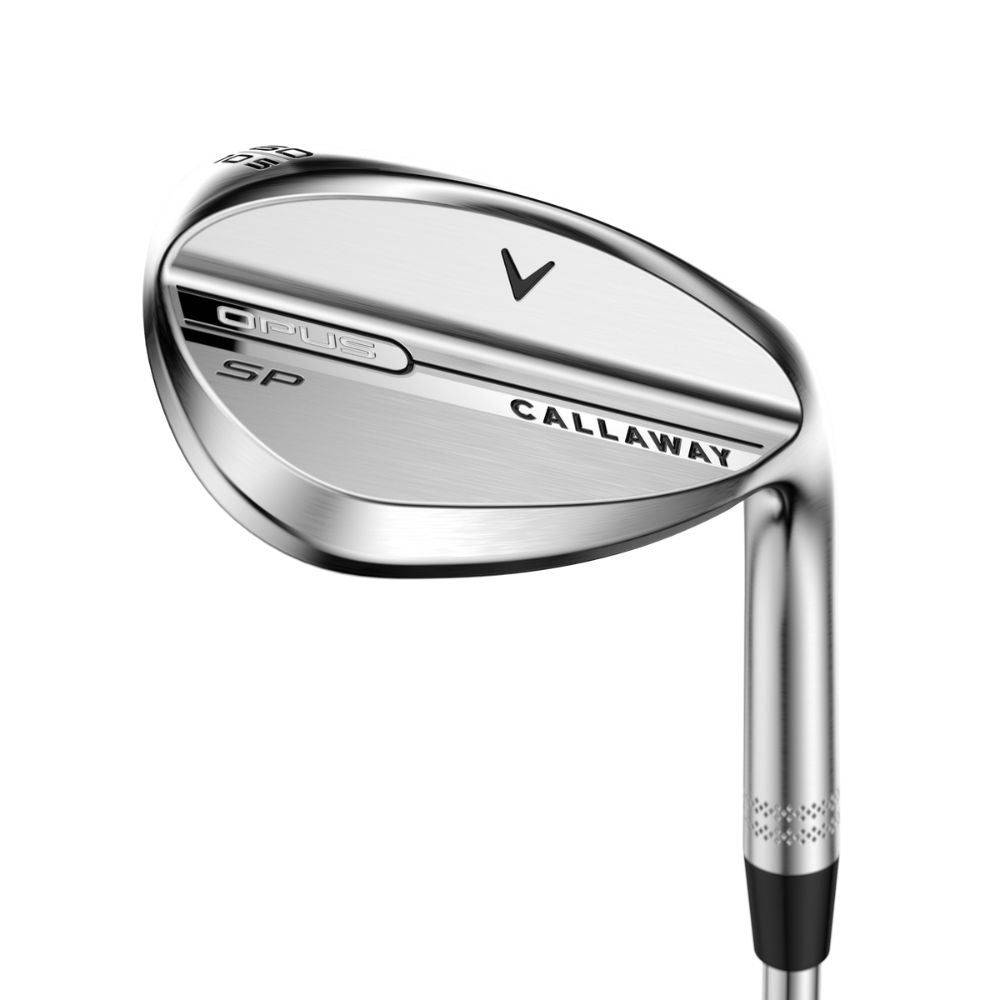
 CONSTRUCTION
A re-engineered 2-piece construction head design strategically reshapes mass to optimize CG locations. The Spin Pocket redistributes weight higher, raising the CG, and promoting a lower, more penetrating launch. The result is more spin and enhanced control, especially when you need to flight shots or attack tight pins.
NEW SPIN GEN 2.0 FACE
The most advanced face in OPUS history. A new 17° groove angle with tighter pitch spacing delivers more groove edge contact for more consistent spin across a variety of lies. Combined with a deeper cross-hatch laser pattern across the face, Spin Gen 2.0 produces enhanced friction for more bite and stopping power on all types of approach shots.
SHAPE 6 – TOUR-VALIDATED PROFILE
Trusted by Tour players for its clean, confident look at address, Shape 6 offers precise leading edge shaping and refined sole geometry. Shape 6 is the 6th and final iteration in the Opus prototype shaping phase, validated by Tour players and major champions. OPUS SP introduces progressive shaping in gap wedges to seamlessly blend with modern iron sets—creating a more cohesive setup from top to bottom.
X GRIND – VERSATILITY WITH BOUNCE
Back by popular demand, the X Grind returns in OPUS SP. Designed for shotmakers who want added bounce for forgiveness, without giving up versatility, the X Grind is ideal for players who like to open the face around the greens or play in firmer turf conditions. It’s the perfect blend of playability and performance in a wide range of shots and conditions.
CONSTRUCTION
A re-engineered 2-piece construction head design strategically reshapes mass to optimize CG locations. The Spin Pocket redistributes weight higher, raising the CG, and promoting a lower, more penetrating launch. The result is more spin and enhanced control, especially when you need to flight shots or attack tight pins.
NEW SPIN GEN 2.0 FACE
The most advanced face in OPUS history. A new 17° groove angle with tighter pitch spacing delivers more groove edge contact for more consistent spin across a variety of lies. Combined with a deeper cross-hatch laser pattern across the face, Spin Gen 2.0 produces enhanced friction for more bite and stopping power on all types of approach shots.
SHAPE 6 – TOUR-VALIDATED PROFILE
Trusted by Tour players for its clean, confident look at address, Shape 6 offers precise leading edge shaping and refined sole geometry. Shape 6 is the 6th and final iteration in the Opus prototype shaping phase, validated by Tour players and major champions. OPUS SP introduces progressive shaping in gap wedges to seamlessly blend with modern iron sets—creating a more cohesive setup from top to bottom.
X GRIND – VERSATILITY WITH BOUNCE
Back by popular demand, the X Grind returns in OPUS SP. Designed for shotmakers who want added bounce for forgiveness, without giving up versatility, the X Grind is ideal for players who like to open the face around the greens or play in firmer turf conditions. It’s the perfect blend of playability and performance in a wide range of shots and conditions.View Product
The post Why tour pros like Scottie Scheffler love this simple grip check appeared first on Golf.